
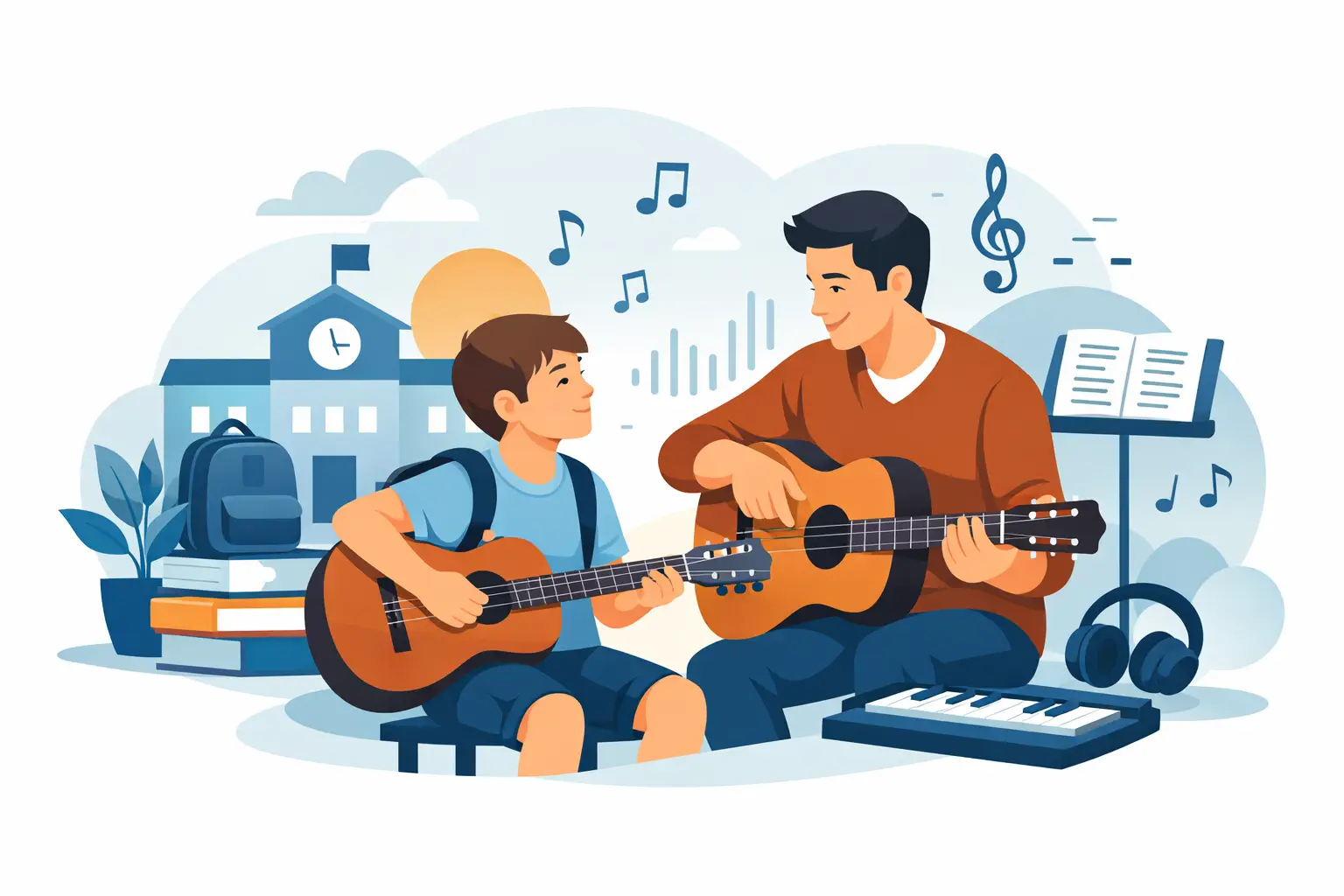
The after-school hours can feel like a race. Homework, snacks, sports, screens, and the daily question of how to spend the afternoon in a way that actually helps your child grow. That is exactly why music lessons after school make so much sense for so many families. They give kids a positive rhythm to the week - one that builds skill, confidence, and joy without feeling like more school.
For parents in Allen and Frisco, the appeal is practical as much as personal. After-school music fits the schedule families already live by, but the real value goes deeper. A great lesson can help a child feel capable, focused, and proud of what they are learning. It can also give teens and adults a consistent creative outlet at a time of day when motivation often fades.
Why music lessons after school fit real family life
A lot of activities sound good in theory but become stressful once they hit the calendar. Music tends to work better because it can be both structured and flexible. A weekly lesson gives students something steady to return to, yet the learning itself is personal. One student may be working toward a recital piece, another may be writing songs, and another may be learning their first three chords.
That matters after school, when energy can be mixed. Some students arrive excited and chatty. Others come in tired from tests, social pressure, or a long day in the classroom. Good music instruction meets them where they are. Instead of demanding one kind of performance from every student, it creates a space where they can reset, refocus, and make progress at their own pace.
For many families, this is the sweet spot. Kids still have enough energy to learn, but the lesson feels different from academics. They get to move, listen, create, and express themselves. Parents get an activity that is meaningful without adding unnecessary pressure.
The benefits go beyond learning an instrument
When parents think about music lessons, they often picture songs, scales, and practice charts. Those are part of it, of course. But what keeps many students enrolled is everything else they gain along the way.
Confidence is usually the first big shift. A student who can play a song for a parent, sing in front of a small group, or keep time with a band starts to see themselves differently. They are not just attending lessons. They are doing something brave and getting better at it.
Focus improves too, though not always in a neat, immediate way. Music asks students to listen carefully, follow patterns, make adjustments, and keep going when something feels awkward at first. That process strengthens patience. It also teaches a healthy relationship with mistakes. Miss a note, try again. Lose the beat, find it again. That kind of repetition can be incredibly grounding.
There is also a social benefit that families sometimes underestimate. Music can be wonderfully personal, but it is also deeply communal. Students who get chances to join a band class, attend a jam session, or perform for others often stay more engaged because they feel connected. The lesson becomes part of something bigger than private practice at home.
Music lessons after school can reduce, not add, stress
This is where parents often hesitate, and fairly so. If a child already has homework and another activity, will music become one more thing to manage?
It depends on the setup. If lessons are rigid, overly intense, or disconnected from the student's goals, they can feel heavy. But when instruction is personalized and encouraging, music often becomes the most energizing part of the week.
That is especially true for students who need an outlet. Some kids spend the school day trying to stay quiet, follow directions, and keep up. Music gives them a different kind of challenge. They can be expressive. They can make noise in a productive way. They can channel emotion into something creative and tangible.
The key is choosing a lesson environment that understands real life. Families need options that work with changing schedules, different learning styles, and seasons of busyness. A student-first program does not assume every child wants the same path or moves at the same speed. It pays attention, adjusts, and keeps the experience positive.
What parents should look for in after-school music instruction
Convenience matters, but it should not be the only factor. The right teacher and studio can make the difference between a short-lived attempt and a long-term love of music.
Start with the teaching style. Kids and teens do best when instructors are warm, clear, and genuinely invested in their progress. Strong teachers know how to balance fun with forward movement. They celebrate wins, correct kindly, and keep lessons aligned with the student's goals.
Then look at the lesson model. Private lessons are a great fit for students who want individual attention and customized pacing. Semi-private lessons can be motivating for friends or siblings who enjoy learning together. Band classes and group experiences are especially valuable for students who light up when music becomes collaborative.
Performance opportunities are another major plus. Not every student wants to be on a big stage right away, and that is okay. Still, having a path toward sharing music can transform a student's commitment. Open mic nights, recitals, jam sessions, and local venue performances give practice a purpose. Students are often more excited to work on their material when they know they will get to use it.
Finally, pay attention to how easy the studio makes the process for families. Flexible scheduling, reschedule options, supportive communication, and a simple way to get started matter more than people realize. Parents are much more likely to stick with lessons when the logistics are manageable.
After-school lessons for beginners, teens, and adults
One of the best things about music is that there is no single starting point. Some students begin at six. Others start in middle school after hearing a song that sparks something. Plenty of adults come back to music after years away, or try it for the first time because now they finally can.
Beginners often thrive with after-school lessons because the routine helps learning stick. A weekly appointment creates momentum. Kids start to expect music as part of life, not just an occasional activity.
Teens benefit for a different reason. They are often balancing academics, sports, and social demands, so they need something that feels meaningful, not forced. Music gives them ownership. They can explore their taste, write original material, prepare for performances, or simply have a place where they feel capable.
Adults need convenience and encouragement. Many are interested in lessons but worry they are too busy or too far behind. The truth is, progress does not require perfection. It requires a plan, a welcoming teacher, and a format that fits real schedules. After-school and early evening lesson times can be ideal for adults who want consistency without disrupting the rest of the day.
In the Allen and Frisco area, Matt Burk Music Studio has seen how powerful this can be when lessons are personalized, supportive, and connected to real performance experiences. Students do not just learn songs. They grow into musicians with goals, community, and the confidence to share what they have learned.
Building a routine that lasts
The biggest challenge with any extracurricular is not signing up. It is staying engaged long enough to see the rewards. That is why the best after-school music programs focus on momentum.
Students are more likely to continue when lessons feel achievable and enjoyable. That means setting clear goals, choosing music they actually like, and giving them regular moments of success. It also means understanding that progress is rarely perfectly linear. Some weeks are strong. Some are slower. What matters is that the student keeps feeling supported.
Parents can help by keeping expectations healthy. Practice does matter, but it does not need to turn into nightly battles. A few focused minutes most days often beats one long, stressful session. Encouragement goes a long way here. When kids feel that music is something they get to do, not just something they have to do, their motivation tends to grow.
And if you are an adult considering lessons for yourself, the same idea applies. Start small. Be consistent. Let yourself enjoy being new at something. Music has a way of giving back quickly when you stay with it.
After-school time is precious. It can disappear into errands and screen time, or it can become a space where confidence, creativity, and real progress take shape. The right music lesson does more than fill an hour. It gives students something lasting to carry into the rest of their week.