
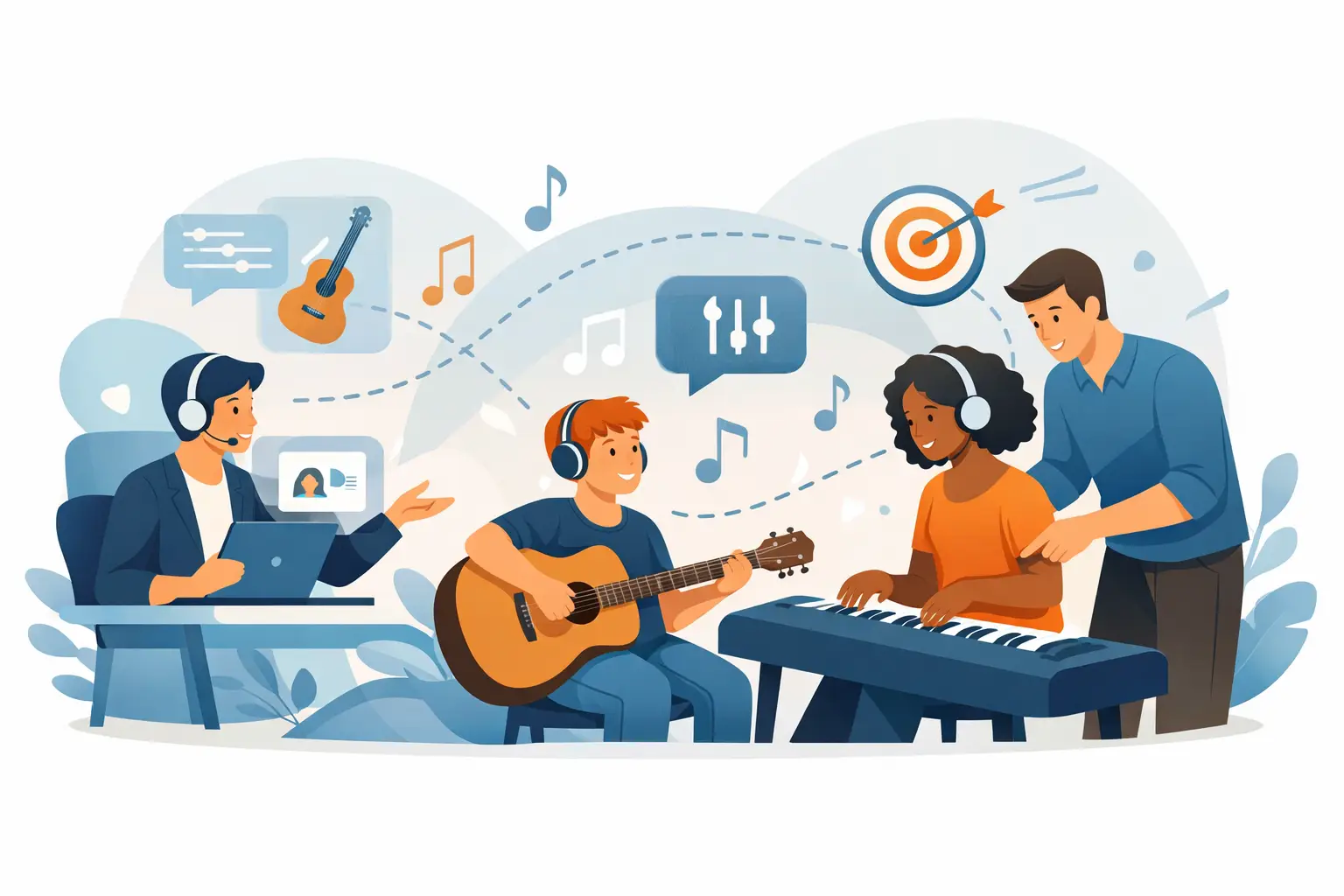
One student wants to play their first song on guitar before school starts. Another wants to sing with more confidence at open mic night. Another is a busy adult finally returning to piano after twenty years. These students should not be taught the exact same way, and that is why customized music instruction matters so much.
When lessons are built around the individual, progress feels more natural and a lot more rewarding. Students stay engaged because they can hear and feel the difference. Parents see better follow-through at home. Adult learners stop feeling like they are behind. Instead of trying to fit into a one-size-fits-all system, each student gets a path that matches their goals, pace, strengths, and personality.
What customized music instruction really means
Customized music instruction is not just letting a student pick a favorite song now and then. Real personalization goes deeper. It starts with understanding what the student wants, what they need, and what will help them keep going when learning gets hard.
For a beginner, that might mean shorter, clear milestones and lots of encouragement. For an advanced student, it may mean more technical refinement, performance coaching, or deeper work on style. For a child who is shy, lessons may focus on small wins that build confidence before stepping onto a stage. For a teen who loves songwriting, the lesson plan might include chord progressions, lyric structure, and recording basics alongside instrument technique.
That kind of flexibility matters because music learning is personal. Two students can be the same age, study the same instrument, and still need completely different teaching approaches. One may learn best through repetition. Another may respond better to visual cues, movement, or playing by ear. Good teaching notices those differences early and adjusts.
Why one-size-fits-all lessons often fall short
Traditional lesson models can work for some students, especially those who naturally thrive on strict structure. But many students lose momentum when every lesson follows the same script regardless of their interests or learning style.
A child may start piano excited, then shut down when every week feels like drills without connection to music they enjoy. An adult beginner may feel embarrassed if lessons move too quickly. A singer may have strong stage presence but need targeted help with pitch, breathing, and confidence. If instruction is too rigid, students often assume the problem is their talent when the real issue is fit.
That is one of the biggest benefits of customized music instruction. It removes unnecessary friction. Students are still challenged, but the challenge is appropriate. They are not bored, overwhelmed, or left wondering why they are doing what they are doing.
Personalized lessons also make practice at home more realistic. A student with a packed sports schedule may need a simpler weekly plan. A highly motivated student may want extra material and stretch goals. The best progress usually comes from consistency, not pressure, so the lesson plan has to work in real life.
Customized music instruction builds confidence faster
Confidence in music does not appear out of nowhere. It grows when students experience steady wins. That could be playing a clean chord change, keeping a drum beat steady, learning to sing a phrase with control, or performing in front of others for the first time.
When instruction is personalized, those wins happen more often because the teacher is setting goals the student can actually reach. That does not mean lowering standards. It means creating a clear sequence of challenges that build skill and confidence together.
This is especially important for kids and teens. Music lessons can shape the way they see themselves. A supportive teacher who knows when to push and when to encourage can help a student move from "I can't do this" to "I did it." That mindset carries into school, public speaking, teamwork, and other parts of life.
Adults benefit too. Many adult students come in with a quiet fear that they started too late or that they are not naturally musical. Personalized instruction helps remove that pressure. Instead of comparing themselves to others, they can focus on their own progress and enjoy the process.
Better results come from goal-driven lessons
The strongest lesson plans usually begin with a simple question: what does success look like for this student?
For some, success means learning fundamentals the right way from day one. For others, it means joining a band, writing original music, recording a track, or performing live. A student-first lesson model keeps those goals visible instead of treating them like an afterthought.
This matters because goals create momentum. If a student knows they are preparing for a recital, a band class, a jam session, or a live venue performance, practice starts to feel more meaningful. Technique has a purpose. Scales support songs. Ear training helps with band communication. Stage coaching becomes part of the musical journey, not a separate skill.
There is a trade-off here worth mentioning. Customized instruction should not mean random instruction. Students still need solid fundamentals. The best teachers know how to balance what the student wants now with what will help them grow long term. Sometimes that means spending part of the lesson on a favorite song and part on rhythm, reading, technique, or timing. It depends on the student, but the balance matters.
The role of fun in personalized learning
Fun is not a bonus in music lessons. It is part of what keeps students coming back long enough to improve.
That does not mean lessons are all games and no structure. It means the learning environment is encouraging, the music feels relevant, and students are allowed to enjoy the process while building real skill. When a teacher connects lesson material to the student's interests, motivation rises. A drummer who loves rock, a singer who loves musical theater, and a pianist who wants to play worship music may all need different repertoire to stay engaged.
Students also thrive when they feel supported by a wider community. Private lessons are powerful, but many musicians grow even faster when they also have chances to collaborate, perform, and be seen. Jam sessions, band experiences, open mic nights, and masterclasses can turn practice into something social and exciting. For many students, that is where confidence really clicks.
Who benefits most from customized music instruction
The short answer is almost everyone, but for different reasons.
Beginners benefit because they need a welcoming start. The first few months often decide whether a student sticks with music or quits. Personalized lessons make those early steps less intimidating.
Intermediate students benefit because they often hit a plateau. They may know the basics but need a smarter plan to move forward. A customized approach can identify what is holding them back and give them focused direction.
Advanced students benefit because their goals are usually more specific. They may need performance prep, audition support, technique refinement, songwriting coaching, or help developing their own style.
Families benefit because personalized music lessons are easier to sustain. When scheduling is flexible and expectations are realistic, music becomes part of life rather than another stress point on the calendar.
What to look for in a studio
If you are comparing lesson options, look beyond the instrument list. Ask how the studio adapts to different ages, skill levels, and goals. Ask whether students have performance opportunities. Ask how instructors handle motivation, setbacks, and changing interests.
A strong program should offer more than a weekly appointment. It should provide guidance, community, and a clear path forward. That is one reason many families in Allen and Frisco look for a studio experience rather than isolated lessons. At Matt Burk Music Studio, that student-first approach is designed to help beginners feel comfortable, help growing musicians stay motivated, and help performers gain real-world experience in supportive settings.
The best fit is a place where students are challenged, encouraged, and genuinely excited to return each week. That combination is powerful.
Music learning is never just about notes on a page. It is about helping each student grow into their own voice, at their own pace, with the right support around them. When lessons are customized, that growth feels possible from the very first step.