
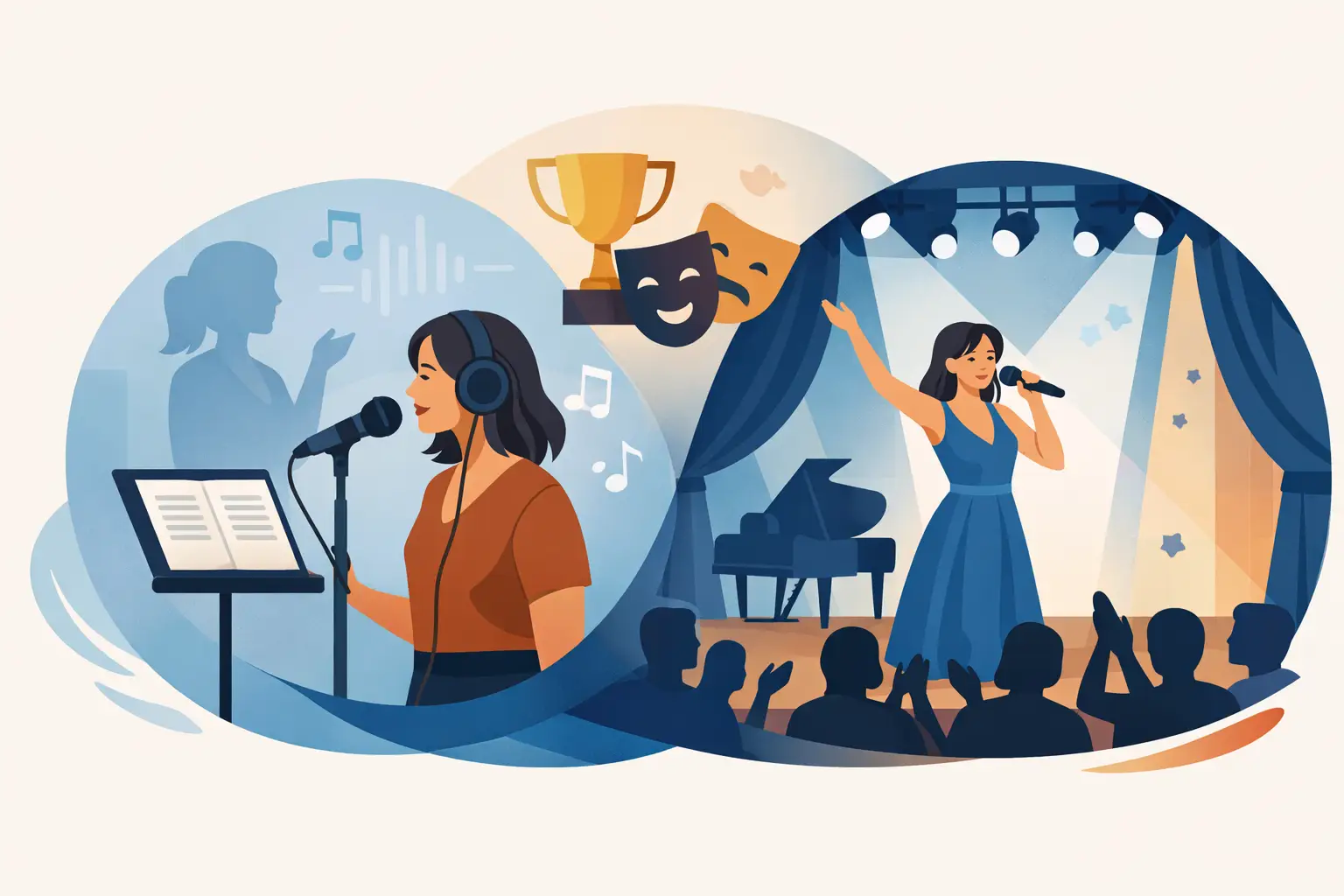
A lot of students can sing well in a lesson room. The real breakthrough often happens when they step up to a microphone, hear the intro start, and realize they can actually do this in front of people. That is why voice lessons with performance opportunities matter so much. They do more than improve pitch and technique. They help singers grow into confident performers who know how to share their voice.
For many families and adult students, this is the missing piece. Traditional lessons can build a solid foundation, but if there is never a chance to perform, progress can feel private and hard to measure. Students may learn songs, breathing, phrasing, and vocal control, yet still feel nervous about singing for anyone outside their teacher. When performance becomes part of the learning process, lessons start to feel more connected to a real goal.
Why voice lessons with performance opportunities work better
Singing is personal. Because of that, confidence is not a small side benefit. It is part of the skill itself. A student who can hit the notes in practice but freezes under pressure is not getting the full value of training. Performance opportunities give singers a chance to use what they are learning in a real setting, with guidance and support.
This does not mean every student needs to aim for a packed theater or a high-pressure audition right away. In fact, the best performance-based programs understand that growth should happen in steps. One student may be ready for an open mic after a few months. Another may need smaller wins first, like singing for a group class, a studio event, or a community showcase. The right path depends on age, experience, and personality.
That is also why a supportive environment matters so much. Performance should stretch a student, not overwhelm them. When lessons are personalized and the teacher knows the student well, challenges can be timed correctly. That balance is where a lot of real growth happens.
What students gain beyond better singing
The obvious benefit is stage experience, but students usually gain much more than that. They learn how to prepare, how to recover from small mistakes, and how to keep going when nerves show up. Those are musical skills, but they are life skills too.
Children often become more comfortable speaking up, trying new things, and handling attention in a healthy way. Teens can develop a stronger sense of identity and pride in their work. Adults who always wanted to sing but felt hesitant often discover that performing is less scary when they have practiced it in a welcoming setting.
There is also a practical musical benefit. Performing exposes things that practice alone can hide. A student may realize they need stronger breath support in longer phrases, better microphone technique, or more consistency in transitions between registers. That feedback is useful. It gives lessons direction and helps students improve faster because they are working toward a clear, lived experience instead of a vague idea of being better someday.
What to look for in a voice program
Not all voice programs handle performance in the same way. Some mention recitals once or twice a year, but the performance side may be limited. Others build it into the student experience from the beginning through showcases, jam sessions, band opportunities, open mic nights, and coached live events.
If performance is important to you or your child, look closely at how the program actually supports it. Ask whether students receive coaching on stage presence, song choice, microphone use, and audience connection. Ask what kinds of venues or events are available. A good program does not simply put students on stage and hope for the best. It prepares them carefully so the experience feels exciting, productive, and age-appropriate.
It is also smart to ask about flexibility. Some students want to perform often. Others want lessons first and performances later. A student-first studio respects both. The best results usually come when goals are customized rather than forced.
Voice lessons with performance opportunities for kids, teens, and adults
A great voice program should not treat every singer the same. Kids, teens, and adults come in with different motivations, and those differences matter.
For kids, performance can be a powerful confidence-builder. Singing in front of others gives them a reason to focus in lessons, remember lyrics, and take pride in their progress. At the same time, younger students usually do best when performance is fun and encouraging rather than overly formal. A welcoming audience and positive coaching can make a huge difference.
For teens, performance often becomes part of self-expression. Many want to sing music they connect with and develop a style that feels authentic. They may also be thinking about school talent shows, auditions, worship teams, local bands, or creative goals of their own. Lessons that include performance opportunities can help channel that energy into real growth.
For adults, the value is often deeply personal. Some are complete beginners. Others sang years ago and want to come back to it. Many adults are not looking for pressure. They want progress, encouragement, and a chance to do something they have always wanted to try. A flexible program with real but supportive performance options can be the difference between staying stuck in the idea stage and finally stepping into the experience.
The role of community in vocal growth
Singers improve faster when they do not feel alone. Community changes the learning experience. It gives students peers to cheer for, events to look forward to, and examples of what growth looks like at different stages.
That matters more than people sometimes realize. When a student sees another beginner get on stage and do well, performing suddenly feels more possible. When families attend events together, students feel supported instead of singled out. When instructors create a culture that celebrates effort as much as achievement, students become more willing to take healthy risks.
This is one reason community-centered music schools tend to stand out. They turn lessons into something larger than a weekly appointment. Students are not just learning songs. They are joining a musical environment where progress is visible and shared.
How performance opportunities should be introduced
The best approach is gradual, thoughtful, and encouraging. A singer does not need to be perfect before performing. Waiting for perfect usually means waiting too long. But students do need preparation, coaching, and the right kind of challenge.
A strong teacher helps with all of that. They guide song selection based on skill level and personality. They work on technique so the student feels steady. They rehearse what it feels like to start strong, stay present, and recover from nerves. They also help set expectations. Not every performance will feel amazing. Some will feel easier than others. That is normal.
What matters is that each performance teaches something useful and builds momentum for the next one.
A better path from lesson room to stage
In the Allen and Frisco area, many families and adult learners want more than standard private instruction. They want a place where students can build skills, enjoy the process, and have real opportunities to perform when they are ready. That combination is where lessons often become more exciting and more meaningful.
At Matt Burk Music Studio, that student-first approach is a big part of the experience. Personalized coaching, flexible lesson options, and regular live performance opportunities help students move from learning privately to performing confidently in front of others. For some, that starts with a first song at a small event. For others, it grows into open mics, band experiences, or respected local venues. The point is not to rush. The point is to help each student grow in a way that fits their goals.
If you are comparing programs, try to think beyond the first few lessons. Ask where the path leads. A good voice teacher can help a student sing better. A great voice program helps that student feel ready to share their voice.
And that is often the moment music becomes something more than a hobby. It becomes part of who they are.