
The first time a student plays a full song without stopping, you can see the change right away. Their posture lifts. Their smile gets bigger. They start thinking, Maybe I really can do this. That moment captures so many of the top benefits of music lessons - not just learning notes and rhythms, but building confidence, focus, and a skill that keeps growing with them.
For parents, that growth often shows up outside the lesson room. A child who sticks with an instrument learns how to work through frustration, listen more carefully, and take pride in progress. For teens, music can become a healthy outlet and a place to belong. For adults, it can be the creative challenge they have been missing for years. The value goes far beyond the instrument itself.
Why the top benefits of music lessons last
Music lessons are different from many activities because they blend creativity with structure. Students get the freedom to express themselves, but they also learn how to practice, improve, and reach specific goals. That balance matters.
A good lesson program does more than hand out assignments. It gives students a clear path forward, encouragement when progress feels slow, and wins they can actually feel. Over time, that creates lasting habits and a stronger sense of identity. Students stop seeing themselves as people who are trying music. They start seeing themselves as musicians.
Confidence grows one small win at a time
One of the biggest reasons families choose lessons is confidence, and for good reason. Music gives students regular chances to do something hard, stick with it, and come out stronger on the other side.
At first, progress can look small. Maybe it is learning a simple chord change, keeping a steady beat, or singing a phrase with better control. Those small victories matter because they stack. A student who keeps having success in manageable steps starts trusting their ability to learn.
That confidence often transfers into other parts of life. Kids may raise their hand more in class. Teens may feel more comfortable performing, speaking up, or trying new things. Adults often rediscover that it is not too late to learn something meaningful. The lesson is bigger than music - growth happens when people see proof that effort works.
Focus and discipline improve naturally
Parents often want an activity that is enjoyable but still teaches responsibility. Music lessons do exactly that. Students learn that progress comes from consistency, not perfection.
Practicing an instrument trains attention in a very practical way. Students listen closely, notice details, and make adjustments in real time. They begin to understand that improvement is not random. It comes from repeating, refining, and staying patient.
Of course, this does not mean every student suddenly becomes laser-focused in every setting. Some need more structure. Some need shorter practice routines. Some do better when lessons are tailored to their pace and personality. That is why personalized instruction matters so much. The goal is not rigid discipline for its own sake. The goal is helping each student build focus in a way that feels achievable.
Creativity gets stronger with guidance
People sometimes assume lessons are all rules and repetition. In reality, great lessons make creativity stronger. Students learn the tools they need to express themselves more clearly, whether that means writing songs, improvising, performing a favorite track, or adding their own style to a piece.
Technique gives creativity traction. A student who understands rhythm, melody, and timing has more ways to turn ideas into real music. That is true for a young piano student, a teen learning guitar, or an adult exploring voice or drums for the first time.
There is also something powerful about giving students permission to enjoy music on their own terms. Some want to play pop songs. Some love classic rock. Some want to sing confidently on stage. Others are drawn to production and recording. When lessons connect to a student's real interests, creativity becomes much more than a side benefit. It becomes a reason they keep coming back.
Performance teaches courage and resilience
Learning privately is valuable, but performance adds another layer of growth. When students prepare for an open mic, recital, or band set, they learn how to handle nerves, recover from mistakes, and keep going.
That experience builds real resilience. Nobody performs perfectly every time, and that is part of the lesson. Students discover that a missed note is not the end of the world. They can breathe, adjust, and continue. That skill matters onstage, but it also matters in school, work, and everyday life.
For many students, performance is the turning point where music starts to feel real. They are not just practicing in a room anymore. They are sharing something they have worked hard to build. In a supportive setting, that can be a huge confidence boost.
Music lessons create healthy emotional outlets
Not every benefit of music is easy to measure, but that does not make it less important. Music gives students a place to process feelings, release stress, and reconnect with themselves.
Children may not always have the words to explain their emotions, but they can often express them through sound and movement. Teens especially benefit from having a creative outlet that feels personal and constructive. Adults dealing with work stress or busy family life often find that music becomes one of the few parts of the week that feels both calming and energizing.
This does not mean lessons replace other forms of support, and music will not solve every challenge. But it can become a steady source of joy, relief, and emotional balance. For many students, that alone makes lessons worthwhile.
Social connection makes learning more fun
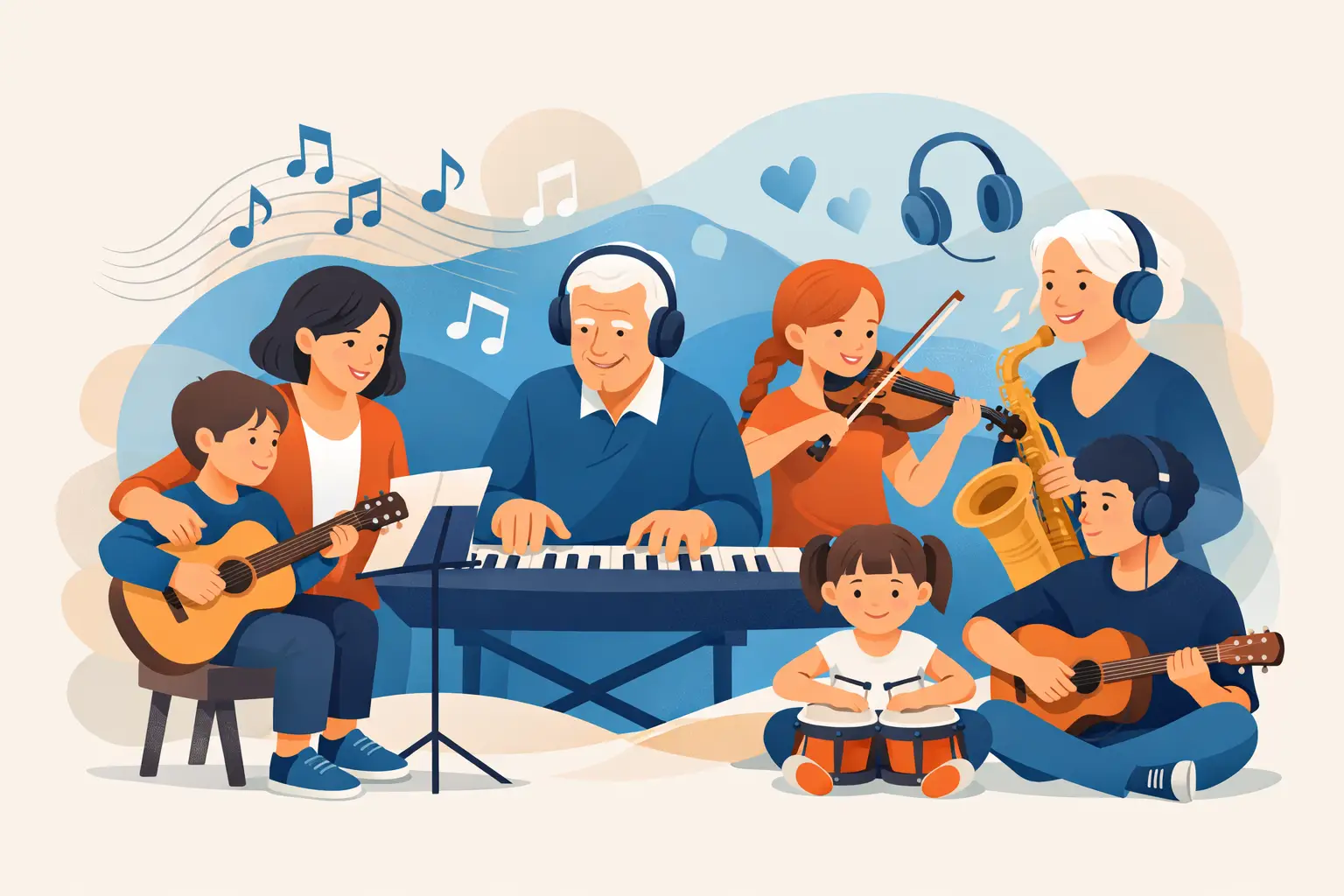
Music does not have to be a solo experience. In fact, some of the best growth happens when students play with others. Band classes, jam sessions, group workshops, and live events can turn lessons into a real community experience.
This is especially valuable for students who need encouragement to come out of their shell. Playing with others teaches listening, teamwork, timing, and mutual respect. It also makes music more exciting. Students stay motivated when they feel like they are part of something bigger than a weekly appointment.
For parents, this can be a major advantage. A student is more likely to stay committed when lessons include friendship, shared goals, and fun milestones. That sense of belonging is one of the top benefits of music lessons that often gets overlooked.
Students learn how to set and reach goals
Music gives students a clear pattern for success. They start with something they cannot do yet. They break it into smaller parts. They work steadily. Then one day, they can do it.
That process teaches goal-setting in a very real way. Students learn to prepare for recitals, master new techniques, and build toward songs that once felt out of reach. Because the progress is so visible, it helps them understand how long-term growth actually works.
This matters for every age group. Young children learn patience and persistence. Teens gain momentum from measurable progress. Adults often appreciate the satisfaction of working toward something personal in the middle of a busy schedule. The timeline will look different for everyone, but the pattern is the same - effort leads somewhere.
Lessons can support school and lifelong learning
Music lessons also strengthen broader learning skills. Students practice memory, pattern recognition, listening, and coordination all at once. They learn to process feedback and make adjustments without giving up.
Some families notice these benefits show up in school routines. Others simply see their child becoming more mature, more patient, or more comfortable tackling hard things. Not every student experiences the exact same academic crossover, and it is best not to promise too much. Still, the habits developed through music often support learning well beyond the studio.
For adults, the benefit is just as meaningful. Continuing to learn keeps the mind engaged and gives people a sense of forward motion. Starting lessons later in life is not falling behind. It is choosing growth.
The best results come from the right environment
Not all lesson experiences feel the same. The biggest benefits happen when students are taught in a way that fits who they are. Some thrive with performance goals. Some need a slower pace and lots of encouragement. Some want structure. Others need variety to stay motivated.
That is why a student-centered approach matters so much. The right teacher helps students feel challenged but not overwhelmed. They make room for fun while still guiding real progress. They understand that confidence is built through trust, consistency, and personal connection.
At a place like Matt Burk Music Studio, that support goes beyond the lesson itself. Students can grow through personalized instruction, community events, and performance opportunities that make their hard work feel meaningful. For many families and adult learners, that kind of environment is what turns interest into lasting commitment.
Music lessons are not about becoming perfect. They are about becoming more confident, more expressive, and more willing to keep growing. Sometimes that starts with one song, one class, and one brave decision to try.