
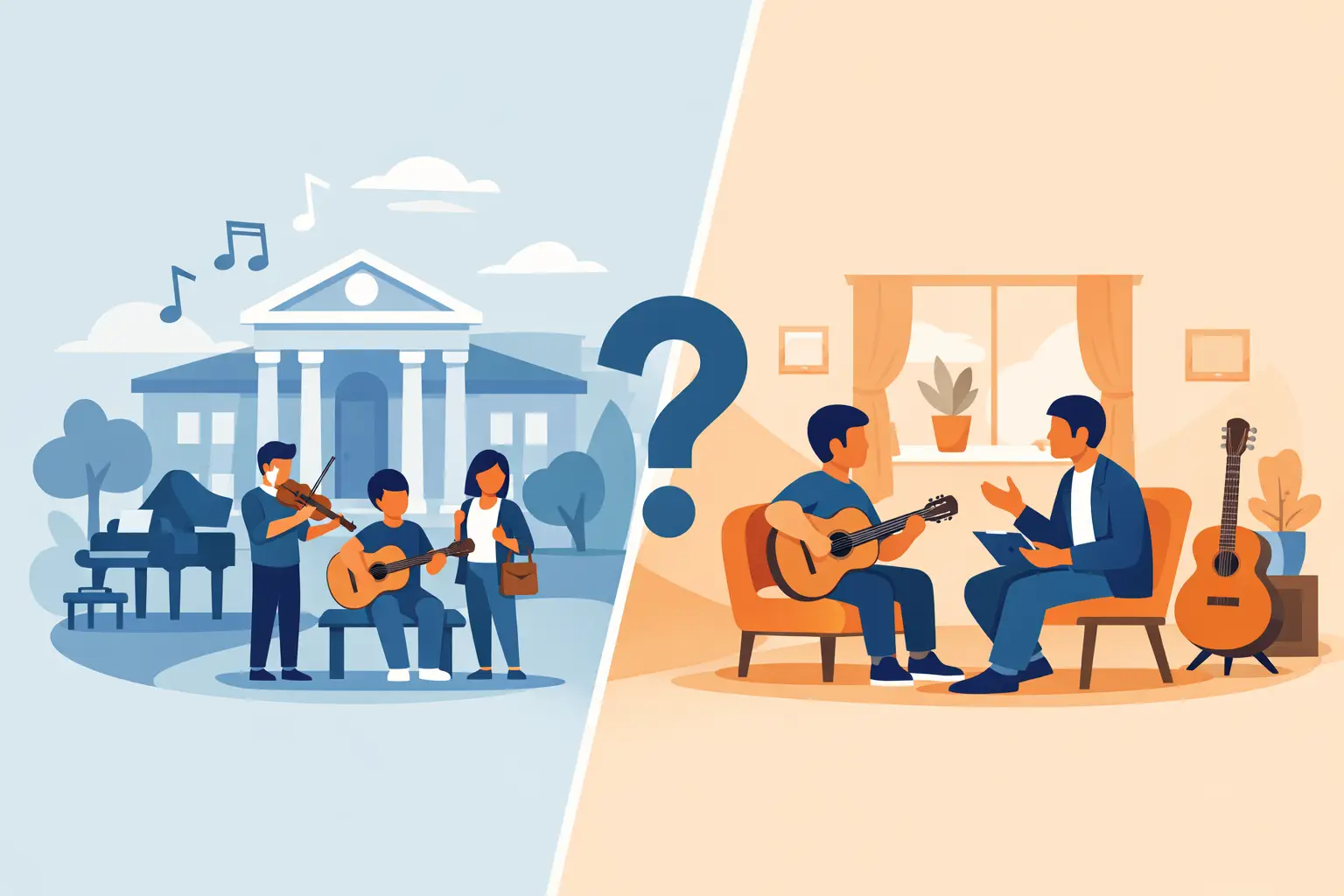
A child comes home excited after learning the opening of a favorite song. An adult finally dusts off the guitar that has been sitting in the closet for years. That first spark matters - and so does what happens next. When deciding between a music school or private teacher, the best choice is the one that keeps a student encouraged, progressing, and excited to make music week after week.
Both options can provide excellent instruction. A talented independent teacher can create a meaningful one-on-one experience, while a music school can offer personalized lessons plus a wider support system. The right fit depends on your goals, schedule, learning style, and the kind of musical experience you want for yourself or your child.
Music School or Private Teacher: Start With Your Goals
Before comparing prices, schedules, or locations, think about the result you hope music lessons will create. Is your child asking to play songs they love, gain confidence, and make friends? Are you an adult beginner who wants a clear path without feeling judged? Is your teen ready to join a band, write original music, or prepare for an audition?
A private teacher may be a great fit when the main goal is focused instruction with one specific mentor. Some students thrive with that simple setup, especially if they already know exactly what they want to study and can reliably work with the teacher's availability.
A music school may be a better fit when the goal is bigger than a weekly lesson. Students can still receive customized instruction, but they may also have access to performance events, band experiences, studio support, and a community of fellow musicians. For many families, those opportunities turn practice from a chore into something students are proud to prepare for.
The question is not which option is universally better. It is whether the learning environment supports the student you have right now and the musician they want to become.
What a Private Teacher Can Do Well
The strongest private teachers bring deep experience, personal attention, and a teaching style that connects with the student. A great teacher can adjust a lesson in real time, explain a difficult concept in a new way, and celebrate small wins that build momentum.
Private instruction can also feel wonderfully straightforward. You work with one person, in one setting, on a schedule you both agree on. For a highly self-motivated student who wants to focus intensely on a particular instrument, technique, genre, or audition piece, that direct relationship can be valuable.
There are trade-offs, though. An independent teacher is often a one-person operation. If they are sick, traveling, changing their schedule, or no longer available, students may need to pause lessons or start over with someone new. Communication, billing, makeup lessons, and recital opportunities can also depend entirely on that teacher's individual capacity.
That does not make private teachers a poor choice. It simply means parents and adult learners should ask practical questions early. What happens when a lesson is missed? How are goals tracked? Are there chances to perform? Is there a backup plan if the teacher is unavailable? Clear answers help prevent frustration later.
What a Music School Adds to Private Lessons
A quality music school is not just a building with lesson rooms. At its best, it gives students a dependable place to grow, with personalized teaching at the center and more ways to use those skills outside the lesson.
The first advantage is consistency. A school can offer more scheduling options, organized communication, and additional instructors across instruments and skill levels. If a family's schedule changes or a student wants to add voice to piano, explore music production, or switch from guitar to bass, the transition can be much easier.
The second advantage is community. Music is personal, but it is also meant to be shared. Students often gain confidence faster when they see other musicians working through the same nerves, celebrating breakthroughs, and getting ready for a show. Jam sessions, open mic nights, masterclasses, and band classes give lessons a purpose beyond checking off assignments.
Performance is especially powerful. Practicing at home teaches skill. Performing teaches courage, preparation, recovery, and pride. A student who walks onto a respected local stage for the first time may be nervous, but they also learn that they can do hard things in front of other people. That confidence can carry into school presentations, team activities, interviews, and everyday life.
At Matt Burk Music Studio, students can build their skills through private or semi-private instruction while also working toward real performance experiences at venues such as House of Blues and Hard Rock Cafe. For students who dream of sharing their gifts with the world, that kind of pathway makes a meaningful difference.
Look for Personalization, Not a One-Size-Fits-All Plan
Some parents worry that a music school will feel less personal than working with one independent teacher. That can happen if a school uses a rigid curriculum without listening to the student. But the best schools build lessons around individual goals.
A beginning piano student may need games, simple songs, and lots of encouragement. A teen vocalist may want help developing healthy technique while preparing pop songs for a performance. An adult guitarist may care more about playing around a campfire or joining friends at a casual jam than mastering advanced theory right away. All of those goals are valid.
Ask how the instructor learns what motivates each student. A strong answer should include more than a method book or a standard lesson plan. Students make their best progress when technique and musicianship are taught alongside music they genuinely want to play.
Personalization also means setting goals that are challenging but reachable. A child does not need to become a concert pianist to succeed in lessons. Success might mean playing one song for grandparents, joining a band class, writing a first original track, or walking into a recital feeling prepared instead of terrified. Those milestones deserve to be celebrated.
Consider Convenience Without Settling for Less
Life in Allen and Frisco moves fast. Between school, work, sports, appointments, and family time, even a great lesson program will not last if it creates too much stress. Convenience matters.
Look for a program with scheduling that fits real family life, clear policies, and helpful support when plans change. Flexible rescheduling can be a major benefit, especially for busy parents and adult learners with unpredictable work calendars. No long-term contract can also make it easier to begin with confidence instead of feeling pressured.
Location is part of convenience, but it is not the whole picture. Think about communication, lesson reminders, billing clarity, makeup options, and whether someone is available to help when you have a question. A great instructor is essential. A well-organized experience around that instructor helps students stay consistent.
Choose an Environment That Makes Practice Easier
No teacher or school can practice for a student. But the right environment can make practice feel more possible.
Students are more likely to sit down with their instrument when they have a song they love, a clear next step, and something exciting ahead. A performance, a band rehearsal, or simply the chance to show an instructor what improved this week can give practice real meaning. Young students also benefit when parents know exactly how to encourage progress without turning every practice session into a battle.
Ask how the program supports practice between lessons. Does the teacher give specific, manageable assignments? Do students understand why they are working on a skill? Is there room for creativity and fun alongside fundamentals? The goal is not perfection. The goal is a steady relationship with music that students want to keep building.
How to Make a Confident Choice
A trial lesson is one of the best ways to decide. Watch how the instructor speaks to the student. Do they listen? Do they explain things in a way that feels encouraging? Does the student leave smiling, asking questions, or wanting to try again?
For parents, pay attention to more than the first few minutes of fun. Ask what the next six months could look like. Find out how progress is measured, when performance opportunities happen, and how the program adjusts as a child grows. For adults, ask whether the instructor will help you play the music you enjoy while giving you enough structure to improve.
The best choice creates both comfort and momentum. Students should feel safe enough to make mistakes and supported enough to stretch beyond what they thought they could do.
Whether you choose a music school, a private teacher, or begin with a free trial lesson to see what feels right, choose the place that makes music feel like something you get to do - not one more obligation on the calendar. The right support can help a first note become a lifelong source of confidence, connection, and joy.