
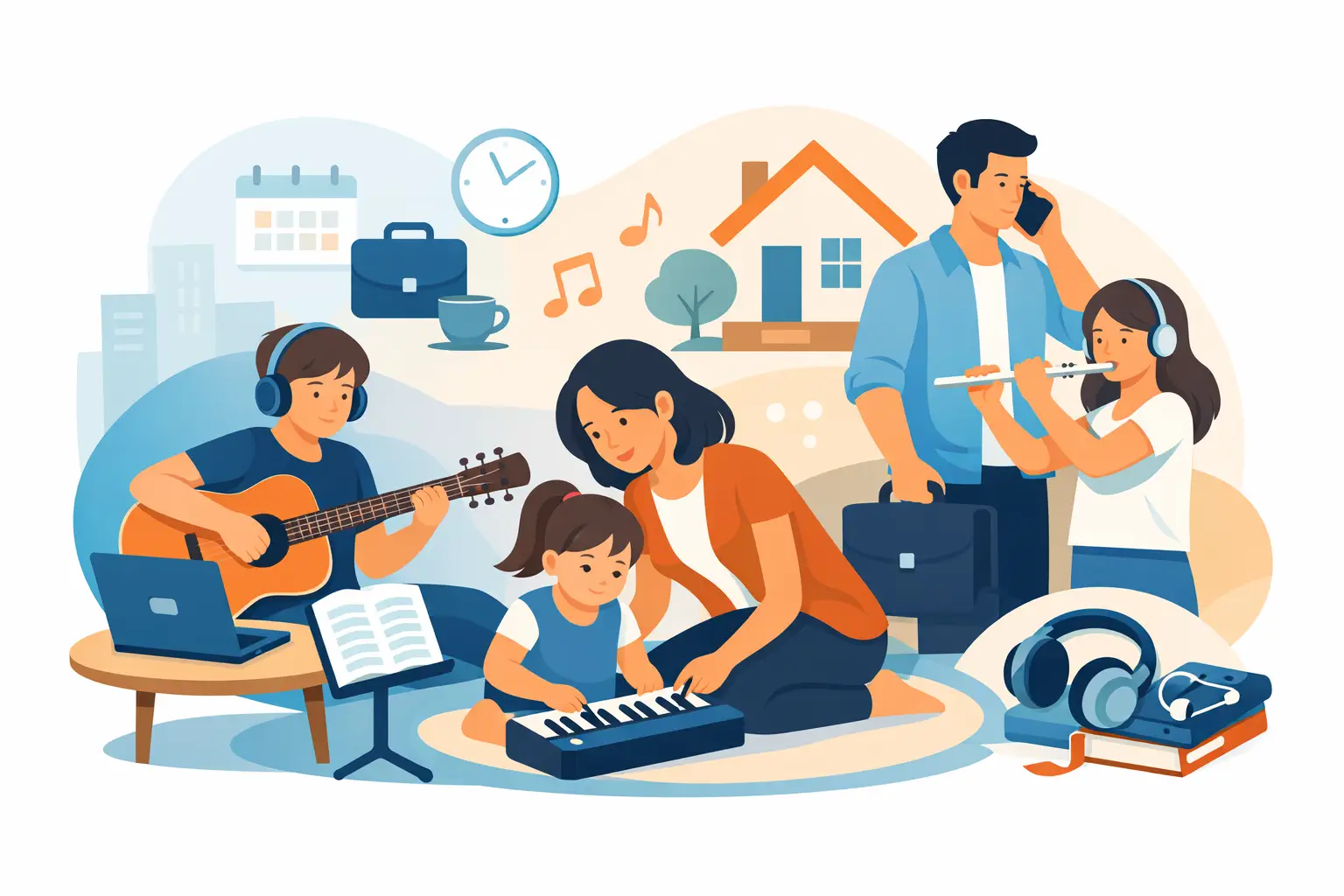
The calendar is already full: school pickup, homework, practices, work calls, dinner, and the occasional evening when everyone simply needs to breathe. For parents, the question is not whether music would be good for their child. It is whether music lessons for busy families can realistically fit without creating one more stressful obligation.
They can - when lessons are built around your family’s life, your child’s goals, and a clear path toward progress. The right music program should give students something exciting to look forward to each week while giving parents confidence that their time and investment are making a real difference.
Why Music Is Worth Making Room For
A good lesson is more than 30 or 45 minutes spent learning notes, chords, or rhythms. It is dedicated time for a student to build focus, confidence, creativity, and the courage to try something new. A quiet child may find a voice through piano or singing. An energetic child may thrive behind a drum kit. A teenager may discover that playing guitar with other musicians feels more rewarding than practicing alone in a bedroom.
Music also gives students visible wins. They learn the opening of a favorite song, play a rhythm cleanly for the first time, or perform for a supportive crowd. Those moments matter because they show a student, “I can do hard things.” That confidence often follows them into school, friendships, sports, and future challenges.
The trade-off is real: any activity requires time and a little consistency. But music does not need to consume every afternoon to be meaningful. A thoughtful plan can keep the commitment manageable while helping students make steady progress.
What Busy Families Need From Music Lessons
Families do not all have the same schedule, learning style, or goal. One child may be ready for weekly piano lessons and daily short practice sessions. Another may need a later appointment after baseball season ends. An adult learner may want guitar lessons that offer a creative break after work, without pressure to become a concert musician overnight.
That is why flexible, personalized instruction matters. Instead of forcing every student through the same method book at the same pace, a great teacher learns what motivates the student. Favorite songs can become teaching tools. A student who loves movie soundtracks may stay engaged through piano arrangements, while a future rock musician may be motivated by learning a recognizable guitar riff.
Look for a studio that respects your time with flexible scheduling and clear communication. No long-term contracts and unlimited rescheduling can make a major difference when a school event, family trip, or sick day changes the week. Flexibility is not about lowering expectations. It is about keeping students connected to music even when life gets busy.
A Short, Focused Practice Routine Works
Many parents hear “practice” and picture a daily argument over 30 minutes at the piano. That does not have to be the experience. For many beginners, 10 focused minutes on most days can be more productive than one long, frustrated session at the end of the week.
The goal is to create a routine that feels possible. Practice right after a snack, before screen time, or while dinner is being prepared. Keep the instrument accessible when you can. A guitar tucked away in a case or a keyboard buried under laundry is much less likely to be played.
Ask the teacher for a simple weekly plan with one or two clear priorities. For example, a student might play four measures slowly, practice a new chord change, and perform one familiar song just for fun. Small goals give busy kids a finish line, and they give parents a way to encourage effort without becoming the music teacher at home.
Choose Goals That Keep Students Excited
The fastest way for lessons to feel like another chore is for a student to lose sight of why they started. Goals bring purpose to the routine. They can be practical, personal, or performance-based: playing a favorite song, joining a band, singing with confidence, writing an original track, or preparing for an audition.
Goals should also fit the student’s age and personality. Some students light up at the idea of performing on a real stage. Others need time to build skills and confidence in the lesson room before sharing their music publicly. Neither approach is wrong. The best teachers gently challenge students while making sure each milestone feels encouraging, not intimidating.
At Matt Burk Music Studio, students can grow beyond one-on-one instruction through jam sessions, open mic nights, masterclasses, band experiences, and opportunities to perform at respected local venues. These experiences give practice a bigger purpose. When students know they are preparing to share music, they often discover a new level of focus and pride.
Make Lesson Day Easier on Everyone
A little preparation can turn lesson day from a scramble into a positive family rhythm. Keep the instrument, music, and any needed materials ready the night before. If your child arrives directly from school, pack a snack and give them a few quiet minutes before the lesson when possible. Hunger and rushed transitions can make even a favorite activity feel difficult.
It also helps to let your child take ownership. Rather than asking, “Did you practice?” every evening, try, “What song are you working on this week?” or “Would you play me the part you improved?” These questions invite conversation and celebrate growth instead of turning music into a checklist.
For younger students, parents may need to help establish the habit. For teens, a calendar reminder and a little freedom to choose songs can be more effective. Adults benefit from the same grace. Missing a practice day does not erase progress. Come back to the instrument, play something you enjoy, and keep moving forward.
Private, Semi-Private, or Band Lessons?
The best format depends on your family’s goals. Private lessons offer individual attention and can be ideal for beginners, students preparing for auditions, or musicians with specific goals. The teacher can adjust every part of the lesson to the student’s pace, interests, and strengths.
Semi-private lessons can be a great fit for siblings, friends, or students who enjoy learning alongside someone else. They add a social element while still allowing for meaningful instruction. Band classes are especially powerful for students who want to learn how to listen, collaborate, keep time, and perform as part of a group.
There is no single “best” choice for every musician. A shy beginner may start privately and later join a band when ready. A student who already loves playing with friends may thrive in a group setting from the start. A free trial lesson is a helpful way to see which approach feels right before committing to a routine.
Progress Should Feel Encouraging, Not Perfect
Students will have weeks when a song clicks quickly and weeks when progress feels slower. That is part of learning music. The key is having an instructor who notices the small victories, adjusts the plan when needed, and keeps the student connected to the joy of making music.
Parents do not need to measure success only by perfect practice streaks or flawless performances. Notice the confidence to try again after a mistake. Notice the child who starts humming a song they are learning, the teen who chooses to practice without being reminded, or the adult who finally plays a piece they have wanted to learn for years.
Those are signs that music is becoming part of who they are, not just another item on the calendar.
Give Your Family a First Step
The right lesson program should reduce stress, not add to it. It should meet students where they are, give them goals they care about, and create opportunities to celebrate their growth. With caring instruction, a flexible plan, and a little room for fun, a packed family schedule can still make space for music.
Start with one lesson and one small goal. Your family may be surprised by how much confidence, connection, and joy can grow from that first song.