
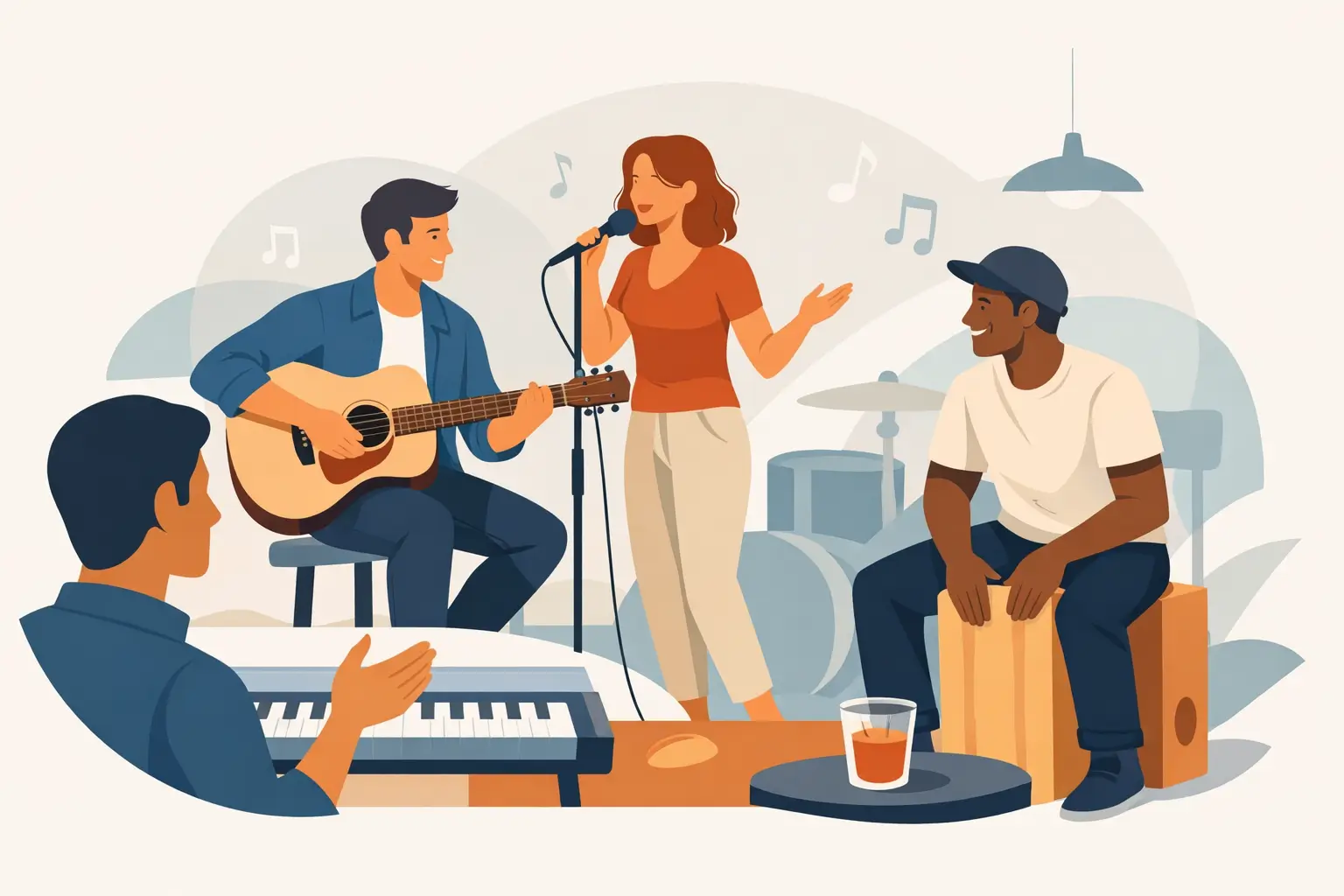
The first few minutes of a jam can feel like walking into a conversation where everyone already knows the topic. Someone counts off a song, a drummer starts a groove, and players seem to know exactly when to step forward or hang back. The good news is that jam session etiquette for beginners is not about knowing every song or playing flashy solos. It is about listening well, being prepared to learn, and helping create a musical space where everyone has fun.
A great jam is one of the fastest ways to build confidence. You learn how songs really work with other musicians, how to recover from mistakes, and how to share the spotlight. Whether you play guitar, piano, drums, bass, sing, or are still building your first few chords, you belong in the room when you come ready to contribute.
Arrive Ready, Not Perfect
You do not need to be an advanced player to join a jam. You do need a working instrument, the basic equipment your role requires, and a willingness to pay attention. Tune before you play. Guitarists and bassists should bring a tuner, cable, and picks. Drummers should ask what gear is provided before hauling in a full kit. Vocalists can bring lyrics or chord charts if the group has agreed on a song.
If you are invited to play something you do not know, be honest. A simple “I do not know that one yet, but I can follow the chords” is much better than pretending and creating confusion. Most welcoming groups are happy to call out a key, show you a pattern, or choose an easier tune.
Preparation also means respecting the start time. Arriving early gives you time to set up without making the whole group wait. At a community jam, that small habit tells other musicians that you value their time.
Listen Before You Play
The most valuable skill at any jam is not speed. It is listening.
Before jumping in, take a moment to notice the key, tempo, feel, and structure. Is the song a blues progression? Is it a verse-chorus pop song? Is the drummer playing a relaxed shuffle or a driving rock beat? Listen for the bass, because the bass often makes the chord movement easier to hear. Watch the person leading the song for cues.
When you are unsure, play less. On guitar or piano, simple chord rhythms can support the song beautifully. On bass, lock in with the kick drum and focus on steady roots. On drums, keep a clear groove rather than adding every fill you know. If you sing, listen for the melody and harmony space before joining.
Playing less is not playing timidly. It is playing with purpose. A musician who supports the groove makes everyone sound better, and that is the kind of player people love to invite back.
Match the Volume in the Room
Volume is one of the quickest ways to make a jam feel great or frustrating. If you cannot hear another player, you may be too loud. If the singer is pushing to be heard over the band, turn down before anyone has to ask.
Start quieter than you think you need to be. You can always add volume, but it is much harder for the group to regain balance after one instrument takes over the room. This matters especially for electric guitar, drums, and amplified keyboards.
A good rule is to make room for the lead vocal, melody, or soloist. Your part should add energy without covering what the song needs most at that moment.
Learn the Unspoken Language of a Jam
Most jams use simple signals to keep songs moving. A nod might mean “your turn to solo.” A raised hand can signal the final chorus or ending. Eye contact from the bandleader may mean “watch me” or “we are changing sections.” If you are new, it is perfectly fine to ask about cues before the song starts.
You can also help yourself by watching instead of staring at your instrument. Look up between phrases. Notice who is leading, when musicians lean in for a change, and how the drummer signals a stop. These details become easier with practice, and they make you feel connected to the group rather than isolated in your own part.
If a song has an ending you do not know, do not guess loudly. Keep your part simple, watch the leader, and land with the group. A clean ending is worth far more than one extra lick.
Jam Session Etiquette for Beginners: Share the Space
A jam is a conversation, not a contest. Every musician deserves room to be heard.
When someone else is soloing, support them instead of competing with them. Guitarists can lay back on rhythm. Keyboard players can choose lighter voicings. Drummers can maintain the groove without filling every gap. Singers can add a harmony only when it serves the moment. Your restraint gives the soloist space to say something musical.
When it is your turn to solo, start with an idea you can repeat. You do not need a long solo to make an impact. Try a short melodic phrase, leave a little space, then answer it with a variation. If you lose your place, smile, listen for the chord change, and rejoin when you can. Everyone gets turned around sometimes.
Avoid treating every song like a personal showcase. A two-minute solo may be exciting in the right setting, but at an open jam it can leave other players waiting. Follow the energy of the room and pass the spotlight along.
Make Mistakes Without Making Them Bigger
Mistakes are part of live music. The goal is not to avoid every wrong note. The goal is to keep the song moving.
If you hit the wrong chord, do not stop and announce it. Find the beat, simplify your part, and come back in. If you miss a lyric, leave space or hum quietly until you find your place. If the tempo feels shaky, listen to the drummer or the strongest timekeeper instead of trying to force the group to follow you.
The same kindness applies when another musician makes a mistake. Do not laugh, roll your eyes, or offer corrections in front of everyone unless they ask for help. A friendly jam lets people take healthy risks. That is where growth happens.
Feedback can be valuable after a song, especially in a class or coached setting. Keep it specific and encouraging: “That ending was tricky, but your rhythm stayed steady,” or “Next time, try watching for the chorus cue.” This builds confidence while giving someone a useful next step.
Ask Questions and Respect the Leader
Many jams have a host, teacher, bandleader, or more experienced player keeping things organized. They may choose songs, call keys, assign solos, or decide who plays next. Respecting that structure helps the session stay fun and fair.
Ask questions before the song whenever possible. You might ask, “What key are we in?” “How many times do we repeat the chorus?” or “Do you want everyone to solo?” Those are smart questions, not beginner questions.
If the leader gives you a suggestion, receive it with an open mind. You do not have to play exactly like anyone else, but trying a new approach is how you improve. At Matt Burk Music Studio, students build this confidence through supportive jam sessions, band experiences, and performance coaching that meet them at their current level.
Be the Musician Others Want to Play With
Musical skill matters, but attitude matters too. Thank the people who organized the event. Introduce yourself to someone you have not met. Compliment a great groove, vocal, or solo. Offer help with setup if you can. These small choices turn a room of individual players into a real music community.
It also helps to know when to step back. If the room is crowded, let others have a turn. If a song is outside your current comfort zone, listen and learn from it. You can ask later what progression they used or write down a song to practice at home.
Your goal is not to prove that you belong. Your goal is to participate, learn, and enjoy making music with people. The more you show up with curiosity, kindness, and a steady willingness to listen, the faster a jam session starts to feel like your musical home.