
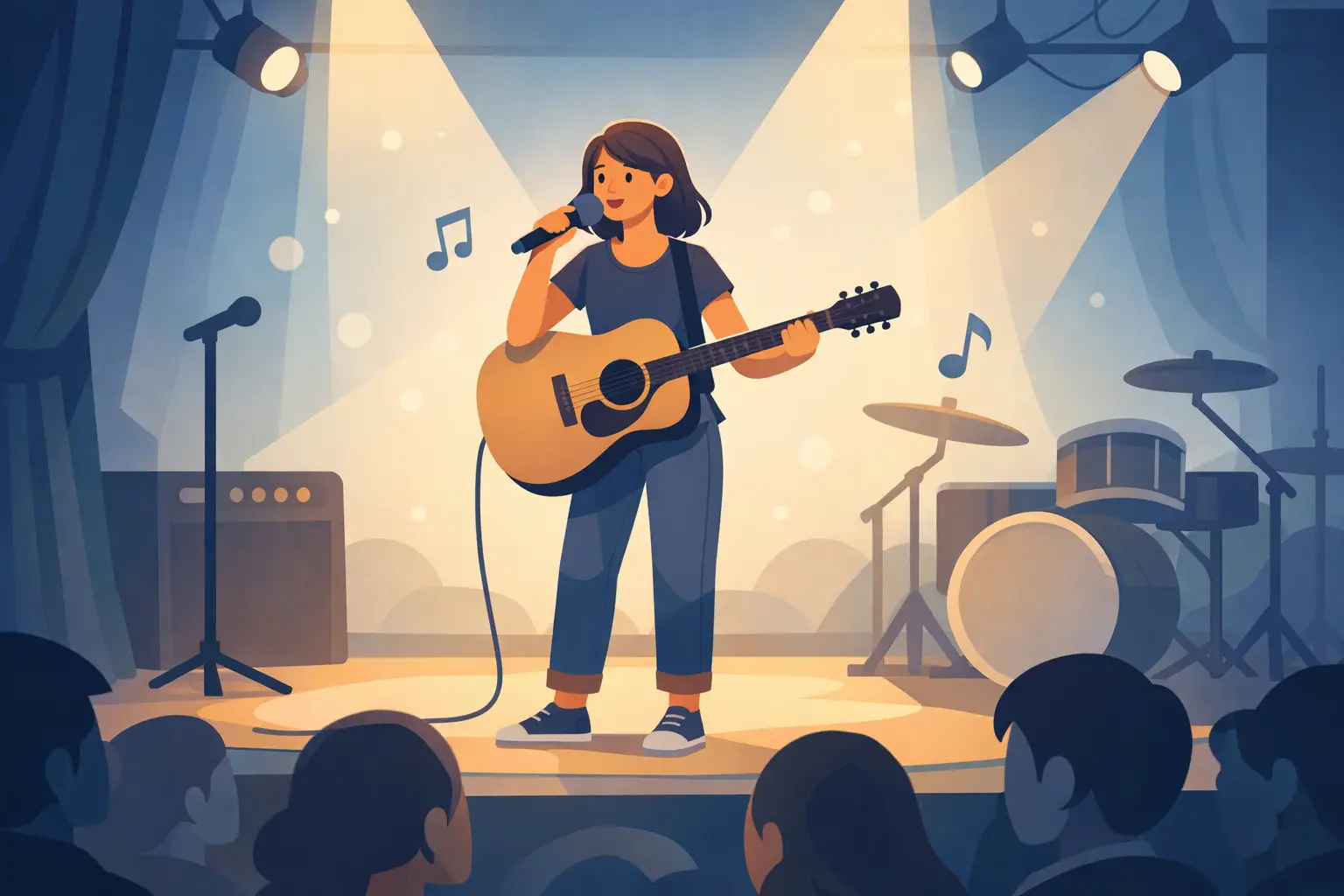
The first time a student walks toward a microphone, piano bench, or drum kit in front of an audience, their hands may shake. They may forget the first note they played perfectly at home. That moment is not proof they are not ready. It is the beginning of learning how students build stage confidence: through preparation, encouragement, and real chances to perform.
At Matt Burk Music Studio, we have seen that confidence is not a personality trait reserved for naturally outgoing performers. It is a skill. Kids, teens, and adults can grow it one lesson, one rehearsal, and one brave performance at a time.
Stage Confidence Starts Before the Stage
A confident performance begins long before a student steps into the spotlight. It starts with knowing their instrument, understanding the song, and having a clear plan for what to do if a small mistake happens.
This is why personalized instruction matters. A beginner learning their first piano piece needs a different kind of preparation than a teen guitarist joining a band or an adult vocalist returning to music after years away. The right song should be challenging enough to create growth but familiar enough that the student can succeed.
In lessons, students build dependable habits: playing slowly, practicing difficult sections separately, counting rhythm out loud, listening closely, and repeating transitions until they feel natural. When a student knows they have put in the work, they walk onstage with something far more useful than false bravado. They have evidence that they can do it.
Preparation does not mean waiting until a song is flawless. In fact, waiting for perfection can keep students stuck. Live music is human. A missed note, a shaky entrance, or an unexpected distraction does not erase the accomplishment of sharing a song. Students gain confidence when they learn they can keep going.
How Students Build Stage Confidence Through Small Wins
The big venue performance is exciting, but it should not be a student's first experience being heard. Smaller, lower-pressure moments help performers get comfortable gradually.
A student might begin by playing for their instructor at the end of a lesson without stopping. Next, they may share a piece with a parent or sibling. From there, they can perform at a casual studio event, open mic night, jam session, or band rehearsal. Each step makes the next one feel more possible.
This gradual approach is especially helpful for students who feel nervous or self-conscious. Asking a shy child to perform a difficult solo for a large crowd right away can create more stress than growth. On the other hand, avoiding performance completely can reinforce the idea that the stage is something to fear. The goal is a healthy middle ground: meaningful challenges with plenty of support.
Small wins change the story students tell themselves. Instead of saying, “I am too nervous to perform,” they can say, “I was nervous, and I still finished my song.” That is real confidence.
Repetition Makes the Room Feel Familiar
Nerves often come from uncertainty. Students wonder where to stand, what the audience will do, whether they will hear themselves, and what happens if they lose their place. Performance opportunities answer those questions through experience.
The more often students practice entering a performance space, setting up their instrument, taking a breath, and beginning, the less mysterious the process becomes. A microphone becomes a tool. A stage becomes a place to communicate. An audience becomes a group of people rooting for them.
That is one reason regular recitals, band experiences, and community events are so valuable. They give students more than a single high-stakes event at the end of a semester. They give them a repeatable pathway to growth.
The Right Coaching Changes the Experience
Students need more than the instruction to “just relax.” Most people cannot turn nerves off on command, and they should not feel bad for having them. A caring teacher helps students name what they are feeling and gives them practical ways to respond.
Before a performance, that may mean choosing one simple focus, such as keeping a steady beat, watching the conductor, or enjoying the first line of the song. It may mean rehearsing the opening several times, since starting is often the hardest part. For vocalists, it can include breathing exercises and clear posture. For instrumentalists, it may include a warm-up routine that settles the hands and ears.
Students also benefit from learning recovery skills. If they make a mistake, they can keep the beat, find the next familiar section, or pause briefly and restart with confidence. These skills are not only for the stage. They build resilience in school, sports, presentations, and everyday life.
Parents can help by keeping performance-day language positive and calm. Rather than asking, “Are you nervous?” try, “What part are you most excited to share?” Rather than reviewing every possible mistake in the car, remind your student that the goal is to communicate, have fun, and finish strong. Their courage deserves attention, not just their accuracy.
Performing With Others Builds Belonging
Solo performance is powerful, but playing with other musicians offers another kind of confidence. In a band or ensemble, students learn that they are part of a team. The drummer holds the groove, the guitarist supports the harmony, the singer tells the story, and every musician contributes something important.
For many students, this shared responsibility makes the stage feel less intimidating. They are not carrying the entire moment alone. They are listening, responding, and creating something bigger with their peers.
Group performance also develops skills that private practice cannot fully teach. Students learn how to recover when someone else misses a cue, how to stay with the tempo, how to adjust their volume, and how to communicate without words. Those are the habits of musicians who can walk into a jam session, school performance, worship team, or local open mic with confidence.
There is a trade-off, of course. Group settings require students to be flexible and patient, and the music may not move at their exact preferred pace. But that challenge is part of the reward. Students discover that being a good musician includes being a good collaborator.
Give Performances a Purpose
The strongest stage confidence comes from having something meaningful to share. A student who chooses a song they genuinely love has a reason to push through the nerves. A child may want to play a favorite movie theme for their grandparents. A teen may want to perform a song that reflects who they are. An adult may finally want to share music with friends after years of saying, “Maybe someday.”
That purpose matters more than chasing applause. Applause feels great, but it is temporary. The deeper win is realizing, “I had something to say, and I said it through music.”
This is also why performance goals should be personal. One student may be ready for a House of Blues or Hard Rock Cafe stage. Another may be taking a huge step simply by playing a full song for a small group. Both deserve celebration. Growth is not a competition.
Confidence Grows When Students Are Allowed to Be Beginners
No performer begins polished. Even experienced musicians feel nerves before meaningful shows. The difference is that they have learned how to use those nerves as energy instead of treating them as a stop sign.
Students need a place where they can try, make mistakes, laugh, try again, and be encouraged by people who care about their progress. With patient instruction, regular performance opportunities, and music they are excited to play, the stage stops feeling like a test. It becomes a place where they can share their gift with the world.
If your student has been waiting for the confidence to perform, let them start before they feel completely ready. A supportive lesson, one favorite song, and one small audience can be enough to begin.