
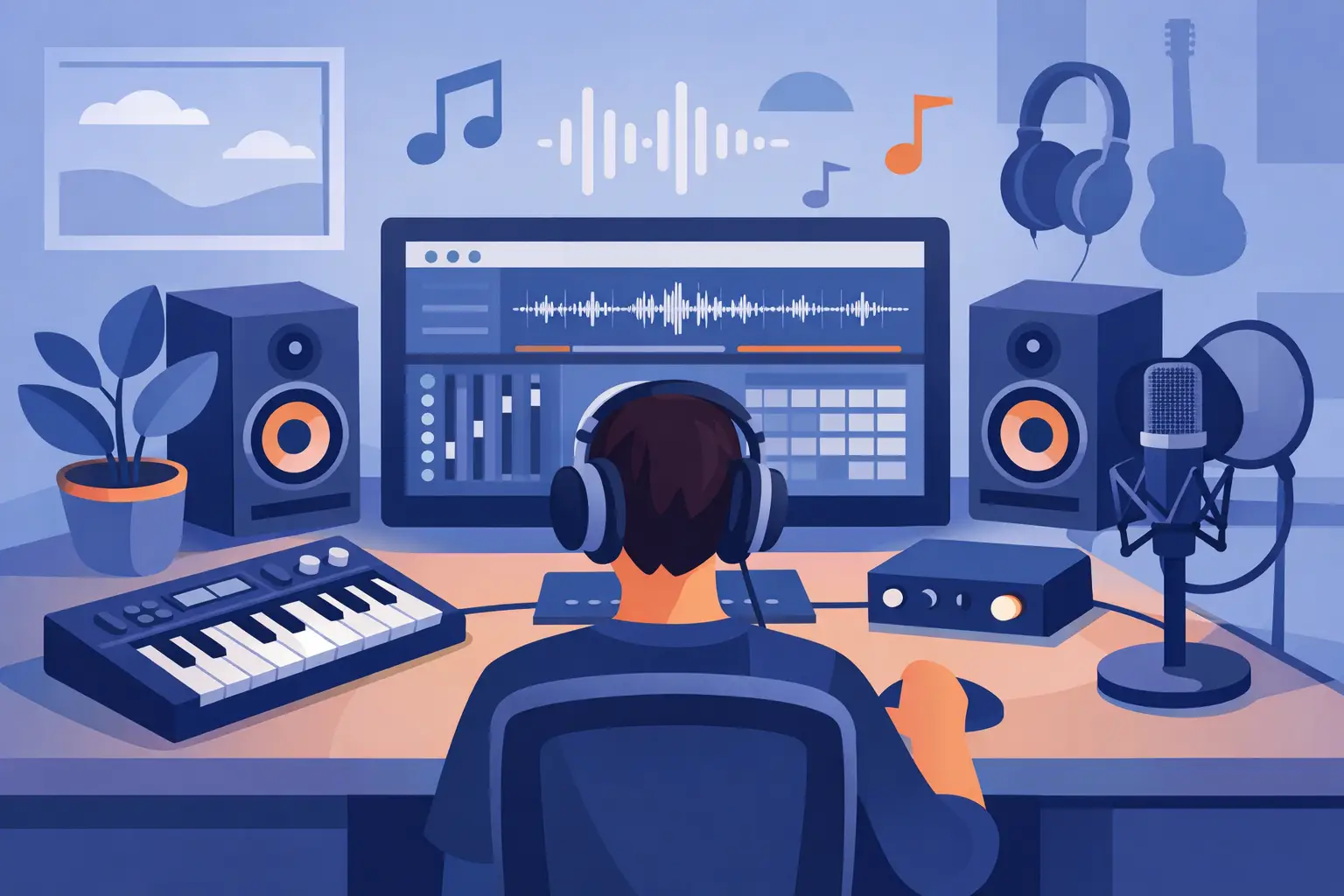
A blank project can feel louder than a full band. You open your laptop, see an empty timeline, and suddenly wonder whether you need expensive gear, years of piano lessons, or a room full of cables to make a real song. You do not. This guide to beginner music production starts with a better goal: make small, complete pieces of music, learn what you enjoy, and let your skills grow one song at a time.
Music production is part creativity, part problem-solving, and part listening. It can be a wonderful next step for a young musician who wants to record original ideas, a teen who loves building beats, or an adult who has always wanted to make music but never knew where to begin. The best starting point is not the most complicated setup. It is a setup you understand well enough to use consistently.
Start With a Simple Production Setup
For most beginners, a computer or tablet, headphones, and a digital audio workstation, often called a DAW, are enough to begin. A DAW is the program where you record sounds, arrange tracks, add effects, and turn an idea into a finished song. GarageBand, BandLab, Logic Pro, Ableton Live, FL Studio, and similar programs all give you ways to create. The right choice depends on your device, budget, and the kind of music that excites you.
If you have an Apple device, GarageBand is an approachable place to learn the basics. If you want to work in a browser and collaborate easily, BandLab can be a comfortable starting point. If electronic music, beat-making, or sampling is your focus, you may eventually prefer a program with deeper production tools. There is no prize for choosing the most advanced software first. Pick one program and spend time learning its layout before jumping to another.
A small MIDI keyboard is a helpful addition if you want to play piano parts, bass lines, drum patterns, or synth sounds. It is not required, though. You can draw notes into the DAW with a mouse or use your computer keyboard. If you plan to record voice, guitar, or another live instrument, an audio interface and a basic microphone will make a noticeable difference in sound quality. Start modestly. A simple setup used every week will take you much farther than expensive equipment that stays in its box.
Learn the Building Blocks Before Chasing Effects
New producers often get excited about plug-ins, sound packs, and huge banks of presets. Those tools can be fun, but they cannot replace a clear musical idea. Before adding ten effects to a vocal or searching for the perfect snare drum, get comfortable with rhythm, melody, chords, and song sections.
Start by creating an eight-bar loop. Choose a tempo, add a drum beat, and build a simple bass line that supports it. Then try a chord progression with three or four chords. You do not need advanced theory to begin. You only need to notice what sounds stable, what creates tension, and what makes you want to hear the pattern again.
From there, add a melody, vocal idea, guitar riff, or interesting sound. Keep it simple enough that you can hear each part clearly. If a track becomes crowded, remove something before adding more. This is one of the most valuable habits a producer can build: arrangement is often about making good choices, not using every available sound.
Listening matters just as much as creating. Pick a song you love and listen for its structure. When do the drums enter? Does the verse become quieter before a bigger chorus? How many instruments are playing at once? You are not trying to copy the song note for note. You are training your ears to recognize decisions that help music move forward.
A Guide to Beginner Music Production Workflow
A simple workflow keeps production fun and prevents unfinished projects from piling up. Begin each session with one goal that can realistically fit your available time. Maybe you are building a drum groove, recording two vocal takes, or choosing sounds for a chorus. A clear target gives your session direction.
First, capture the idea before judging it. Record the guitar phrase, hum the melody into your phone, or program the beat while the energy is there. Next, build the basic structure. Move beyond the loop by creating an intro, verse, chorus, and ending, even if each section is short. Then clean up the performance and timing. Finally, make a rough mix so you can hear the song as a whole.
Do not wait until you know every feature in your DAW before finishing something. Complete a one-minute track. Then make another. Early songs may sound rough, and that is completely normal. Finished projects teach you more than endless tweaking because they reveal what you want to improve next.
Saving versions is also a smart habit. Label projects clearly and keep a copy before making major changes. You may decide that yesterday's chorus was better, or you may want to revisit an idea after learning new skills. Organized files protect your creative work and reduce frustration later.
Recording: Focus on Performance First
A clear, confident performance usually matters more than a pricey microphone. Before recording, take a few minutes to warm up, tune your instrument, and make sure your level is not clipping. Clipping happens when an input is too loud and distorts. Lower the gain rather than trying to fix distortion after the fact.
Record in the quietest space available. Soft furniture, rugs, curtains, and closets full of clothes can reduce distracting room reflections when recording vocals. You do not need a professional studio room to make meaningful progress at home. You do need patience, a quiet moment, and several takes.
For vocals, try recording the same part three times. Listen for the take with the best feeling, not just the fewest mistakes. For guitar, piano, or drums, record slowly enough that the groove stays steady. Editing can improve timing, but it cannot always replace the energy of a performance that feels alive.
Mix for Clarity, Not for Loudness
Mixing is the process of helping each part of a song work together. Beginners sometimes turn every track up because they want to hear it. The result is usually a crowded, tiring mix. Instead, start by lowering all the track volumes and bringing up the most important element first. In many songs, that may be the vocal, melody, or main beat.
Use panning to create space from left to right. A guitar can sit slightly to one side while a keyboard sits on the other. Use EQ carefully to reduce muddiness or harshness, but do not treat it like a magic fix. If two sounds fight each other, changing the arrangement or sound choice may work better than adding more processing.
Check your mix at a comfortable volume on more than one listening device. Headphones reveal detail, while a phone speaker quickly shows whether the main melody and rhythm still come through. Take breaks, too. Your ears can get tired, and a ten-minute pause often makes problems easier to hear.
Build Skills Through Small, Fun Challenges
Consistency beats long, stressful sessions. A child may enjoy making a beat inspired by a favorite game soundtrack. A teen might want to produce a pop chorus, hip-hop track, or cinematic cue. An adult beginner may be most excited to record an original acoustic song. The style can change, but the learning process stays similar: create, listen, adjust, and finish.
Give yourself friendly challenges. Remake a drum groove using your own sounds. Write a song with only four tracks. Produce a 30-second intro for a pretend podcast. Record a cover song and focus on getting the vocal emotion right. These projects give you practical experience without the pressure of creating a masterpiece every time.
It also helps to share your work with supportive people. Feedback should not make a beginner feel small. The right feedback celebrates what is working and gives one or two clear next steps. Performing, playing in a band, or sharing a recording with a trusted teacher can build the confidence to keep going.
Get Guidance When You Feel Stuck
Music production has many moving parts, from songwriting and rhythm to recording, editing, arranging, and mixing. Learning online can be useful, but it can also send beginners in ten directions at once. Personalized instruction gives you a path based on your goals, whether you want to produce beats, record your voice, create original songs, or prepare music to share onstage.
At Matt Burk Music Studio, production instruction can fit alongside lessons in piano, guitar, voice, drums, bass, and songwriting. That connection matters because better musicianship makes production easier, while production gives students an exciting way to hear their musical ideas come to life. A supportive teacher can help you solve the exact problem in front of you instead of guessing your way through hours of tutorials.
Your first project does not have to impress everyone. It just has to teach you something and make you want to create the next one. Start with the sounds you have, finish a small idea this week, and give yourself permission to grow into the producer you want to become.