
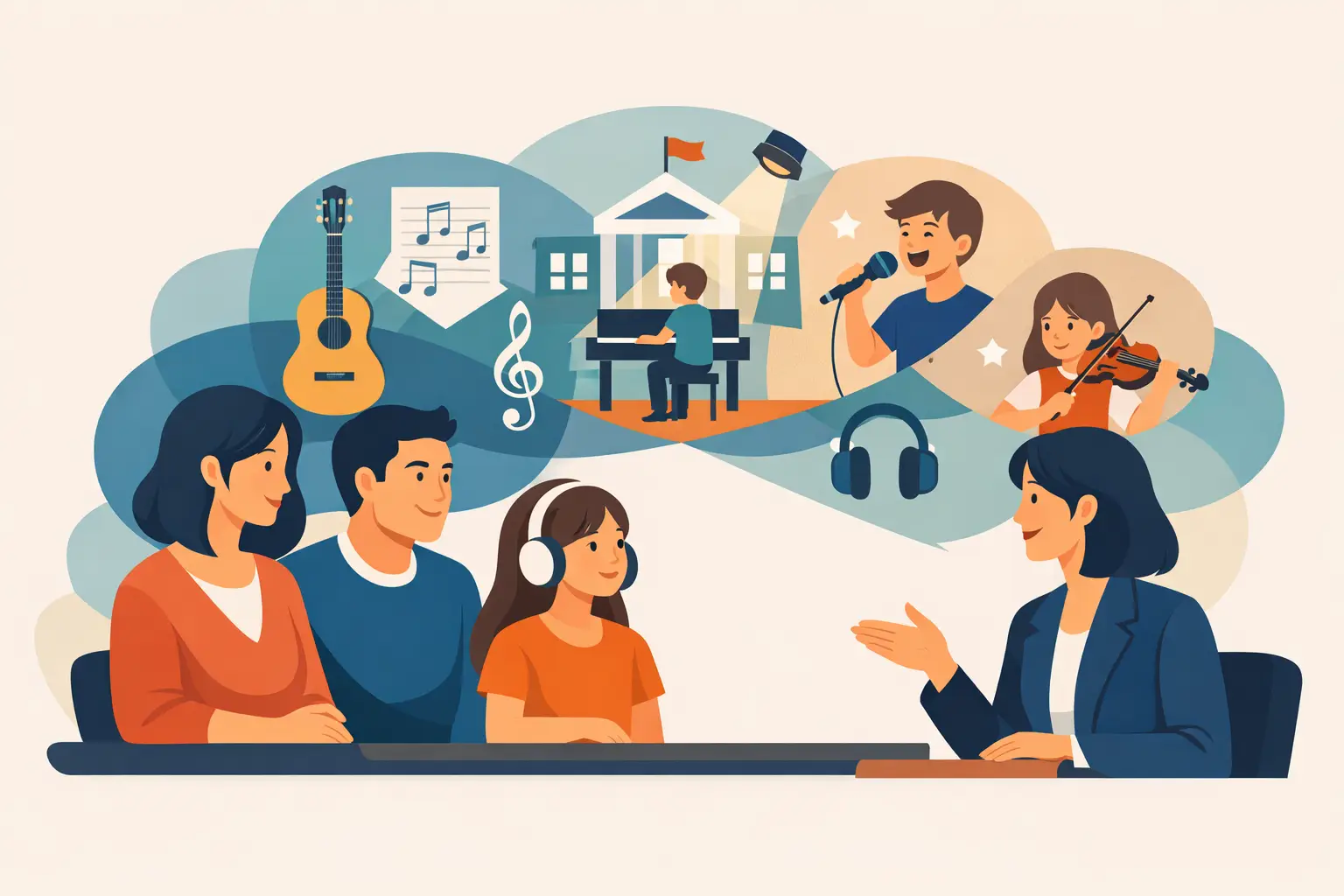
The first question most families ask is not, "Which instrument should we choose?" It is, "How do we find something our child will actually stick with?" That is exactly where a family guide to music programs should begin. The best program is not the fanciest one or the one with the longest list of offerings. It is the one that fits your child, your schedule, and your goals well enough that music becomes part of real life instead of one more activity to manage.
For some students, that means quiet one-on-one lessons with a patient teacher. For others, it means band classes, jam sessions, or regular chances to perform. Many parents are surprised to learn that success in music often has less to do with natural talent and more to do with consistency, encouragement, and a program built around the student rather than a rigid system.
A family guide to music programs starts with your goal
Before comparing lesson types or instruments, take a minute to define what you want from music lessons. A child who wants to sing on stage needs a different experience than a child who simply wants a creative outlet after school. A teen interested in writing songs may grow faster in a program that includes music production or band coaching, while an adult beginner may care most about flexibility and a welcoming pace.
There is no single right goal. Some families want confidence. Some want discipline. Some want social connection, creative expression, or meaningful progress on a favorite instrument. What matters is choosing a program that understands the goal and can build a path toward it.
This is where many families get stuck. They assume all music programs are basically the same, so they shop by price or proximity alone. Those factors matter, but they are only part of the picture. A lower-cost option that does not keep a student engaged can end up feeling more expensive in the long run if the student quits after a few months.
What to look for in a music program
A strong program should make it easy to answer three questions. Will my child enjoy showing up? Will they make visible progress? Will this work for our family week after week?
Enjoyment matters because students stay with what feels rewarding. That does not mean every lesson should be pure entertainment. Real growth takes focus and effort. But a great teacher knows how to balance challenge with encouragement so students leave feeling capable, not defeated.
Progress matters because motivation grows when students can hear and feel improvement. Ask how the program tracks growth. That may happen through recitals, goal check-ins, skill milestones, recordings, or teacher feedback. Students do better when they know what they are working toward.
Practical fit matters just as much. Families are busy. If scheduling is difficult, rescheduling is stressful, or the program requires a level of rigidity that does not match your household, even a good program can become hard to maintain.
Private lessons vs. group classes
Private lessons are often the best fit for students who want personalized instruction and steady progress. The teacher can adapt to the student’s pace, interests, strengths, and challenges. This works especially well for beginners who need confidence and clear direction, and for advancing students who want targeted coaching.
Group classes can be a great option for students who learn best socially. They can bring energy, teamwork, and a sense of shared momentum. Group settings are often especially helpful for students who want band experience, ensemble skills, or a less intense introduction to music.
Neither format is automatically better. It depends on the student. Some thrive in private lessons but need occasional performance or group experiences to stay inspired. Others love group classes but benefit from one-on-one support to sharpen technique. The strongest programs often give families room to combine both.
Performance opportunities are not just for advanced students
Many parents assume stage experience should come later, after a child is fully ready. In reality, thoughtful performance opportunities can be one of the most powerful parts of a music education. They give lessons a purpose. Students practice differently when they know they are preparing to share what they have learned.
That does not mean every student needs high-pressure performances right away. The key is finding a program that offers supportive stepping stones. Open mics, studio events, jam sessions, and beginner-friendly showcases can help students build confidence little by little.
For some students, performing is the moment everything clicks. They stop seeing lessons as homework and start seeing themselves as musicians.
How to tell if a program is student-centered
A true family guide to music programs has to address something parents can feel right away but may struggle to name. Does the program treat students like individuals, or like slots on a schedule?
Student-centered programs ask good questions early. What music does the student enjoy? What are they excited about? What feels hard right now? What would make lessons feel successful three months from now?
That approach matters because students are more motivated when their lessons connect to their own interests. A child who loves pop songs may need a different entry point than one who is fascinated by jazz or classic rock. An adult returning to piano after years away needs a different kind of encouragement than a seven-year-old trying an instrument for the first time.
You can often spot a student-first culture in the little things. Teachers are warm but clear. Expectations are realistic. Communication with families is organized. The environment feels encouraging instead of intimidating. There is room for fun without losing structure.
Questions families should ask before enrolling
You do not need to interrogate a school, but asking a few smart questions can save time and stress later. Ask how lessons are personalized, what happens when a student misses a week, how performance opportunities work, and how instructors help students stay motivated through slow patches.
It is also wise to ask what beginner support looks like. Some students start strong and then hit a confidence dip a few weeks in. That is normal. A great program expects that moment and knows how to guide students through it.
If your child is shy, ask how the teacher builds comfort. If your teen wants to join a band, ask whether the program includes collaborative playing. If you are an adult learner with a packed schedule, ask how flexible the program really is. The answers should feel practical, encouraging, and honest.
Matching the program to the season of life
One reason families leave music too early is that they choose a program that would be perfect in theory, but hard to sustain in their current season. A household with multiple kids, sports schedules, and frequent travel may need flexibility more than formality. A highly motivated teen may need challenge and performance goals more than convenience. A young beginner may need shorter-term wins and a teacher with exceptional patience.
This is not lowering the standard. It is choosing a setup that gives music a real chance to last.
In Allen and Frisco, many families are looking for exactly that balance - excellent instruction, clear progress, and an experience that still feels fun and manageable. Studios that combine personalized lessons with supportive events, community, and flexible scheduling often stand out because they help families keep momentum instead of burning out.
When a free trial matters
If a program offers a free trial lesson, take it seriously. A trial is not just a nice bonus. It is one of the best ways to see whether the teaching style, environment, and structure feel right.
Pay attention to how the student responds after the lesson. Were they smiling? Curious? Proud of something they learned? Did the teacher make them feel safe enough to try? Those early signals matter.
A good trial should also help the parent feel informed. You should leave with a clearer sense of next steps, not more confusion. That first experience should make music feel possible.
The best family guide to music programs ends with trust
At the end of the day, families are not only choosing a lesson time. They are choosing people who will shape a student’s confidence, habits, and relationship with music. That is a meaningful decision.
Look for a program that sees the whole student, celebrates progress, and gives families practical support along the way. When lessons are personalized, encouraging, and connected to real goals, students do more than learn notes and rhythms. They grow into people who are willing to try, improve, and share what they can do.
That is the kind of music education worth making room for. If your family is ready to begin, start with a place that makes the first step feel exciting, welcoming, and completely doable.