
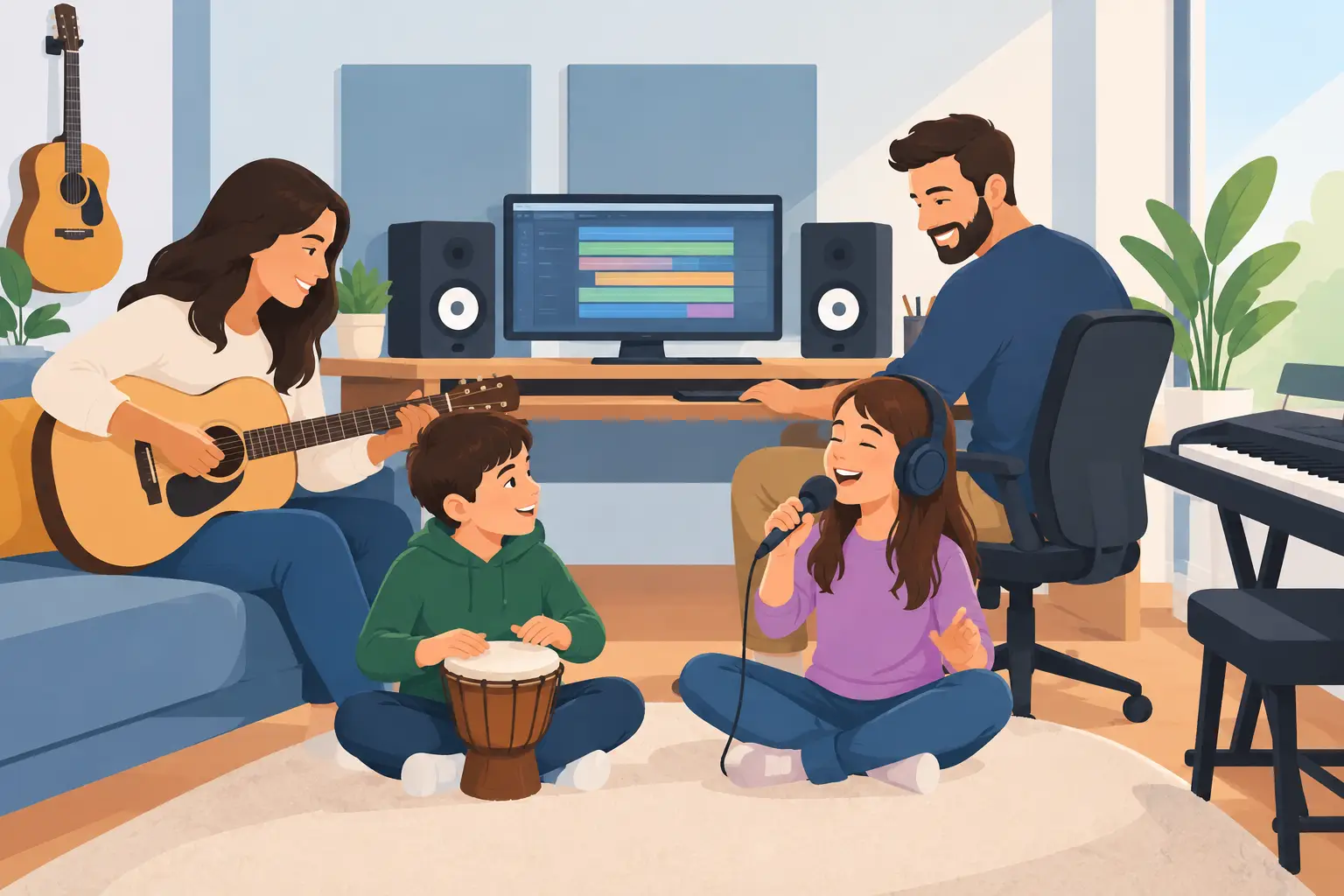
A child may start music lessons hoping to play a favorite song. A parent may hope for a confidence boost, a positive after-school activity, or a creative outlet that lasts longer than one season. A meaningful family friendly music studio review should look beyond whether a studio teaches piano, guitar, or voice. It should help families see whether their child will feel known, encouraged, and excited to keep growing.
The right studio does more than fill a weekly time slot. It gives students a place to try, make mistakes, celebrate progress, and share their music with people who are cheering them on. For busy families in Allen and Frisco, that kind of experience can make all the difference.
What “Family Friendly” Should Actually Mean
Family friendly is more than a waiting room with a few chairs and a teacher who is nice to kids. Those things matter, but families deserve a bigger picture. A truly welcoming music school creates an environment where students of different ages and skill levels feel safe taking creative risks.
For younger children, that means lessons should be engaging, patient, and structured around attainable wins. A beginning pianist who can play a short melody with both hands has accomplished something worth celebrating. A young guitarist learning to switch between two chords needs encouragement and clear coaching, not pressure to move at someone else’s pace.
For teens, family friendly means having room to develop their own musical identity. They may want to sing current songs, join a band, write an original track, or finally learn the drum beat they have been practicing at home. Great instruction gives them strong fundamentals while respecting what makes them want to play.
Adults belong in this conversation, too. A supportive studio should welcome the parent who is learning alongside a child, the returning musician, and the beginner who has always wanted to give music a try. No one should feel embarrassed for starting from square one.
Family Friendly Music Studio Review: Questions to Ask
A studio’s website can tell you what instruments it offers, but a conversation with the studio should reveal how it serves people. Before enrolling, ask a few practical questions that get to the heart of the experience.
Will lessons be built around my student?
Every student brings different goals, learning styles, and comfort levels into the lesson room. Some students are motivated by sheet music and measurable milestones. Others light up when they learn songs by ear, improvise, or perform with friends. The strongest programs do not force every student through one narrow track.
Ask how instructors personalize lessons. A thoughtful answer should include more than “we teach beginners.” Look for teachers who can meet a student where they are, then build a clear path forward. That path might include technique, reading, songwriting, ear training, music production, or preparation for a school audition. The details depend on the student, and that is exactly the point.
How does the studio handle nerves and mistakes?
Music learning includes awkward moments. Fingers miss keys. Voices crack. Rhythms fall apart halfway through a song. A family-centered studio treats these moments as part of the process, not as proof that a student is not talented.
Listen for language that is encouraging without being empty praise. Students need teachers who can kindly explain what to adjust, demonstrate how to practice it, and celebrate the effort it takes to return next week stronger. Confidence is not built by pretending everything is easy. It is built by realizing, “I can work through hard things.”
Are there chances to perform when a student is ready?
Private lessons create skills. Performance experiences help students learn how to use those skills in the real world. Not every child wants to walk onstage immediately, and that is okay. The best opportunities are supportive, well-prepared, and offered as an invitation rather than a threat.
Ask whether the studio hosts recitals, open mic nights, jam sessions, band programs, or masterclasses. Performing at respected local venues can be especially powerful. Students get to feel the excitement of a real stage while families see the progress that can be hard to notice from week to week.
Does scheduling work for real family life?
A great teacher is only helpful if attending lessons becomes a constant struggle. Between school, sports, work, appointments, and traffic, flexibility matters. Find out how the studio approaches reschedules, make-up lessons, calendar changes, and communication.
No-contract options and reasonable rescheduling policies can take pressure off families who are trying something new. They also show that the studio respects the fact that life is busy. Convenience should not replace quality, but a high-quality program should make it easier for families to stay consistent.
Is there a community beyond the lesson?
Some students thrive with quiet one-on-one coaching. Others discover their confidence when they play with peers. A studio that offers both private instruction and community experiences can give students more ways to connect with music.
Band classes, group events, and casual jam sessions teach skills that cannot always be practiced alone. Students learn to listen, keep time, recover after a missed note, and support other musicians. Just as important, they see that music can be social, joyful, and shared.
Can we try it before making a commitment?
A first lesson tells a family a lot. Does the instructor connect with the student? Does the student leave smiling, curious, or proud of something they tried? Does the studio team make the enrollment process clear and comfortable?
A free trial lesson is a smart way to answer those questions. It gives students a low-pressure first step and gives parents a chance to see whether the teaching style, environment, and goals feel like a good fit.
Progress Should Feel Personal, Not Rushed
One common mistake in choosing lessons is looking for the fastest possible path. Quick wins are wonderful, especially for beginners, but lasting progress comes from consistency and instruction that matches the student’s pace.
A child who needs extra time to coordinate both hands on the piano is not behind. A teen who spends several lessons refining a vocal performance is not wasting time. A beginning adult guitarist does not need to play like a lifelong musician in month one. The right teacher knows when to challenge a student and when to slow down long enough for a skill to click.
That does not mean lessons should feel directionless. Families should be able to see growth through new songs, stronger technique, improved confidence, better practice habits, and performance readiness. Progress looks different for every musician, but it should always be visible and worth celebrating.
Why Performance Changes the Music Lesson Experience
There is a special moment when a student realizes they can share music instead of only practicing it. For some, that moment happens in a living room for grandparents. For others, it happens under stage lights with a band behind them. Both matter.
Performance development helps students turn preparation into confidence. They learn how to start again after a mistake, how to breathe before singing, how to count in a song, and how to stay present when people are watching. These are musical skills, but they also carry into school presentations, sports, interviews, and everyday life.
At Matt Burk Music Studio, students can build toward live experiences through private and semi-private lessons, band classes, jam sessions, open mic nights, and performance opportunities at local venues. The goal is never to push every student into the spotlight before they are ready. It is to make the spotlight feel possible.
Choosing a Studio Your Family Can Grow With
The best choice may not be the closest location or the lowest monthly price. Those factors matter, especially for a busy household, but consider the full value of the experience. A studio with experienced, caring instructors, clear communication, flexible options, and meaningful opportunities to perform can help a student stay motivated long after the first burst of excitement.
Pay attention to how the studio speaks about students. Do they focus only on rules and credentials, or do they also talk about goals, enjoyment, growth, and belonging? Strong music education includes discipline, but it should never drain the joy out of making music.
Your family does not need to have every musical goal figured out before the first lesson. Start with curiosity, a favorite song, or a simple wish to feel more confident. With the right encouragement, that small beginning can become a skill your student is proud to share with the world.