
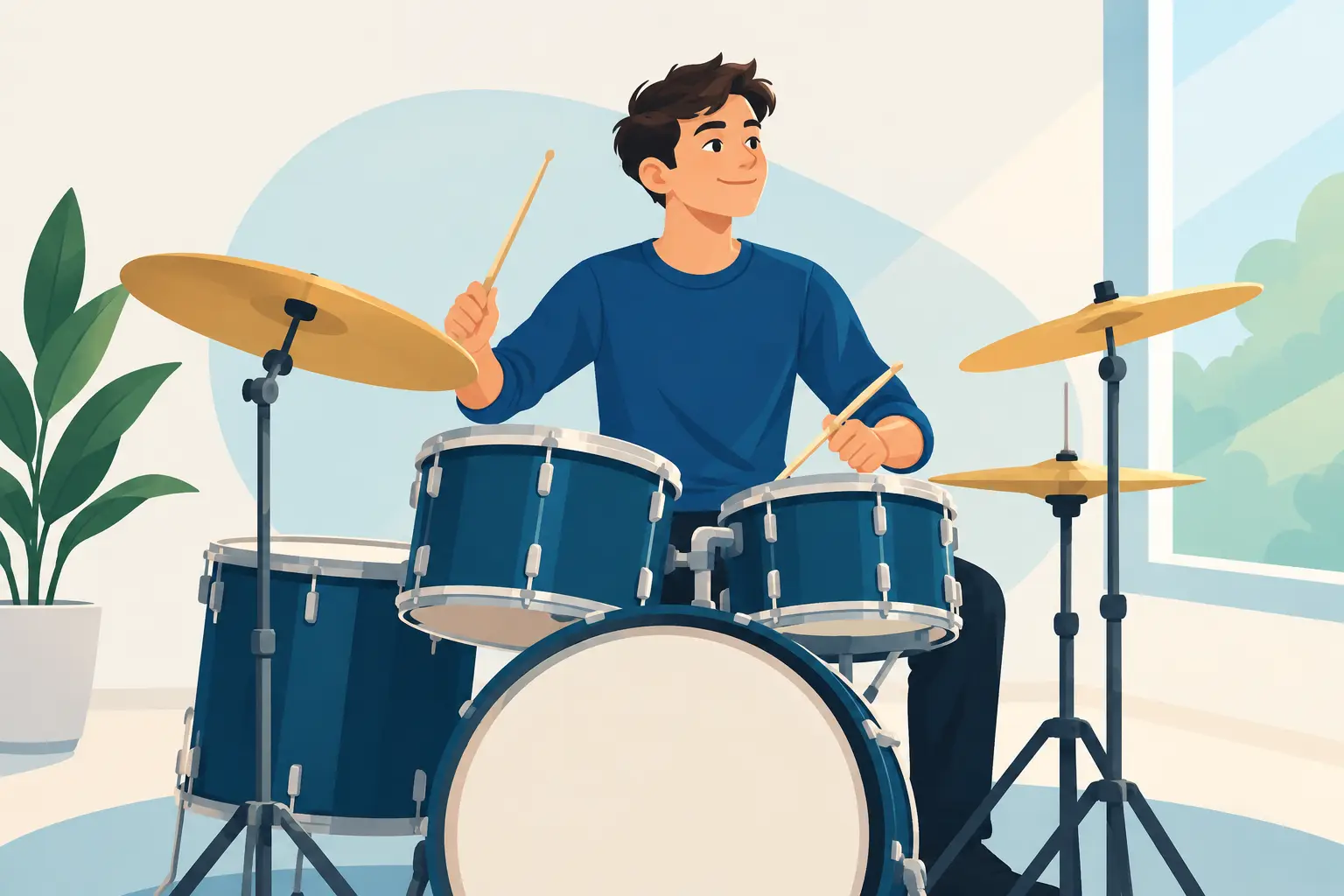
The first time a student plays a steady beat with a favorite song, something changes. What looked like a complicated instrument becomes a place to focus, have fun, and make real music. Great drum lessons turn that first exciting moment into lasting skills, whether the student is a child picking up sticks for the first time, a teen who wants to join a band, or an adult returning to music after years away.
At Matt Burk Music Studio, students are encouraged to grow at their own pace while working toward goals that matter to them. That might mean playing a school talent show, joining a band, learning the groove from a favorite song, or building the confidence to perform on a real stage.
What Students Learn in Drum Lessons
Drums are about much more than hitting things in time. They teach coordination, listening, patience, musical expression, and the responsibility of supporting other musicians. A drummer helps hold a song together, so even beginner students can feel the satisfaction of contributing something important right away.
A personalized lesson plan usually begins with the foundations: how to hold sticks comfortably, sit with good posture, create clean sounds, and understand the basic parts of a drum set. Students learn to count beats, recognize note values, and play simple patterns that make music feel organized instead of overwhelming.
From there, lessons can expand into rock, pop, funk, jazz, hip-hop, country, worship music, or the styles a student genuinely loves. Favorite songs are not a distraction from learning. They can be one of the best ways to practice timing, dynamics, song structure, and musical memory with a clear purpose.
Rhythm Comes Before Speed
Many new drummers want to play fast right away. That excitement is a wonderful thing, but speed without control can lead to sloppy habits and frustration. Strong instructors help students slow down just enough to build a dependable sense of time.
A student may start by playing a basic beat with a metronome, clapping a rhythm, or keeping a steady pulse along with a song. These exercises can seem simple, yet they are the skills that help a drummer sound confident in any musical setting. Once the groove feels solid, fills, faster patterns, and more advanced coordination become far more achievable.
Technique Protects Progress
Good technique is not about making lessons feel strict or technical. It helps students play more comfortably and enjoyably. Learning relaxed stick control, balanced hand movement, and smart foot technique reduces unnecessary tension and makes it easier to play for longer periods.
For younger students, technique is often taught through short, engaging exercises and songs rather than long drills. Adults may appreciate understanding exactly why a certain movement feels better or creates a clearer sound. The approach should fit the learner, not the other way around.
Why Personalized Drum Lessons Matter
A one-size-fits-all curriculum can leave students bored or discouraged. Some students are ready to read notation quickly. Others learn best by listening, watching, and repeating. Some want a clear weekly practice plan, while others need help turning a busy schedule into a realistic musical routine.
Personalized drum lessons make room for these differences. An experienced instructor can challenge a student who is progressing quickly without making a beginner feel rushed. They can also help a student move past a frustrating plateau by changing the exercise, slowing down a song, or connecting the lesson to music the student already enjoys.
For parents, this individualized attention can be especially valuable. Children do not all gain confidence in the same way. One child may light up after receiving specific encouragement for a small improvement. Another may become motivated by a performance goal or the chance to play with other musicians. A caring teacher notices those cues and creates a path forward.
Practice Should Feel Possible
Progress comes from consistent practice, but that does not mean every student needs an hour of practice every day. The best routine is the one a student can actually keep. Ten focused minutes several times a week can build momentum, especially for beginners.
Students benefit from knowing exactly what to do between lessons. Rather than being told to simply “practice drums,” they should leave with a few clear goals: play a beat slowly with a metronome, work on one transition, listen closely to a song, or repeat a short section until it feels comfortable.
Parents can help by creating a predictable practice time and celebrating effort, not just perfection. Adults can make practice easier by keeping sticks and a practice pad somewhere visible. Small habits matter. A drum set is exciting, but meaningful practice can happen on a pad, a pillow, or even through careful rhythm exercises away from the kit.
Performance Builds a Different Kind of Confidence
Private instruction gives students the attention they need. Performing gives them a chance to share what they have built. Both matter.
Playing in front of others can feel intimidating at first, but it teaches skills that reach far beyond music. Students learn how to prepare, recover from small mistakes, stay calm under pressure, and keep going when nerves show up. Those are valuable lessons for school presentations, team activities, job interviews, and everyday life.
Not every student wants to perform immediately, and that is okay. Performance opportunities should feel like an encouraging next step, not a test. Starting with a low-pressure jam session, open mic event, or small group class can help students gain comfort before taking on a larger stage.
For students who are ready, playing with a band is a major milestone. Drumming changes when a student has to listen to a bassist, follow a singer, support a guitarist, and stay connected to the whole group. It is one of the most fun ways to discover that music is a shared experience.
Choosing Drum Lessons for Your Family
The right lesson experience should feel organized, welcoming, and connected to your goals. A good instructor brings real musical knowledge, but also patience and the ability to explain ideas in a way that makes sense for each student.
When evaluating options, consider whether the school offers flexible scheduling, a comfortable learning environment, and opportunities to grow beyond the weekly lesson. Students often stay motivated when they can see a path from first beat to favorite song, from practice room to band rehearsal, and from a small accomplishment to a proud performance.
It also helps to think about practical needs. Young beginners may benefit from shorter, highly interactive lessons. Teens may want song-based instruction and band opportunities. Adult learners may need flexible rescheduling and a pace that works around work and family responsibilities. There is no single “right” age or goal for learning drums.
A Great First Lesson Starts With Curiosity
Students do not need prior experience, perfect rhythm, or a full drum set at home to begin. They only need curiosity and a willingness to try. A first lesson can answer practical questions about equipment, reveal what style of music excites the student, and show that rhythm is something people can learn step by step.
The most rewarding drum lessons make room for progress and personality. They help students become more capable musicians while reminding them that making music should feel joyful. Start with one beat, keep showing up, and let each small win become the confidence to play the next one.