
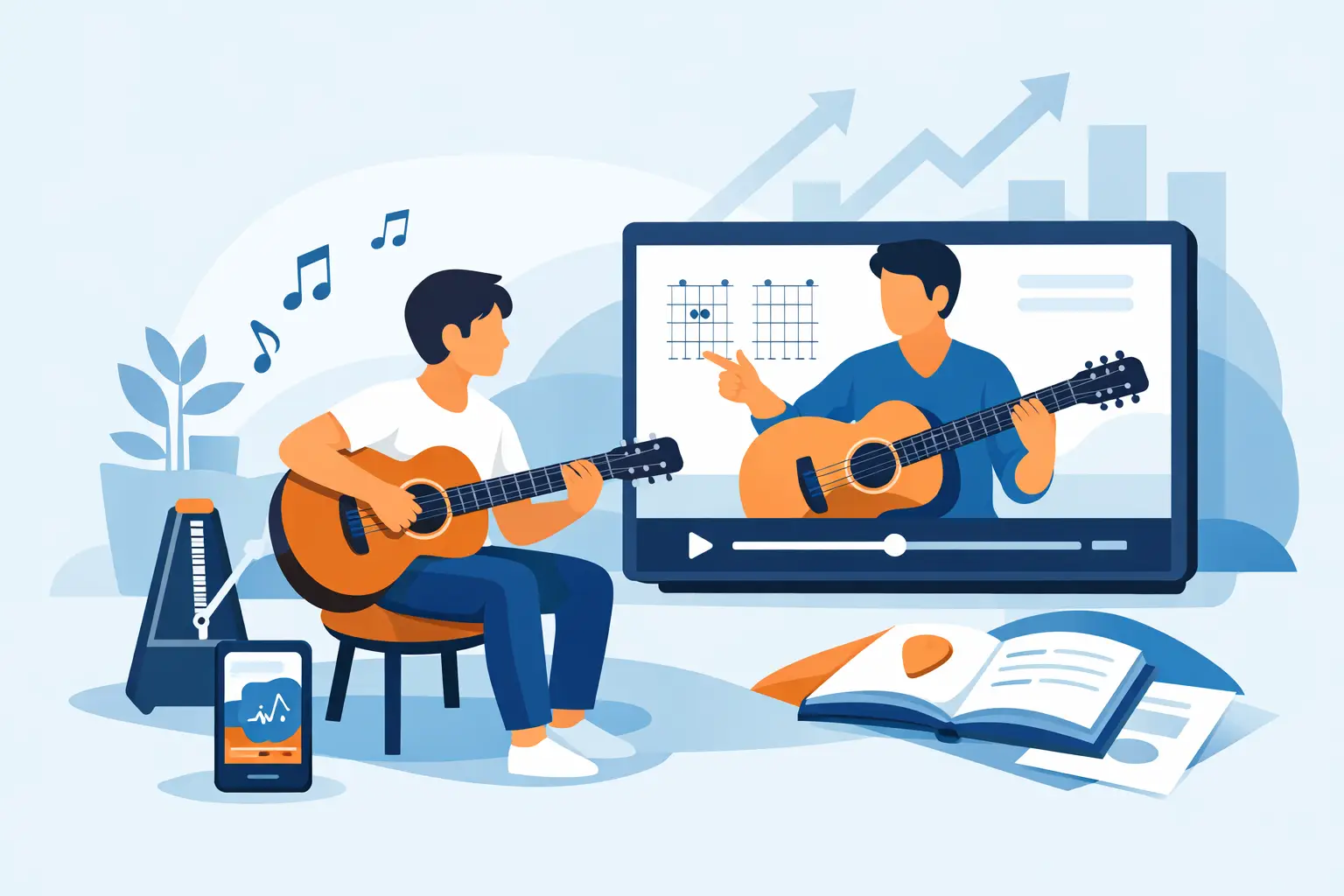
That first guitar lesson usually starts with a mix of excitement and awkwardness. Your fingers do not land where you want, the strings feel tougher than expected, and even holding the instrument can feel unfamiliar. That is exactly why a beginner guitar lesson guide matters. A good start helps new players build confidence early, avoid bad habits, and actually enjoy the process enough to keep going.
The good news is that beginners do not need to be naturally gifted to make real progress. They need the right plan, a supportive teacher, and a lesson experience that makes music feel possible from day one. Whether you are a parent looking for lessons for your child or an adult finally deciding to learn, the early stage should feel encouraging, structured, and fun.
What a beginner guitar lesson guide should really include
A lot of people assume guitar lessons begin with memorizing notes and grinding through exercises. Some technique work does matter, of course, but the best beginner instruction balances skill-building with early wins. If a student only practices drills, they get bored. If they only play around without direction, progress slows down.
A strong beginner guitar lesson guide should include posture, hand position, rhythm, chord basics, and simple songs that feel rewarding. It should also leave room for the student's age, goals, and musical taste. A seven-year-old beginner usually needs a different pace and teaching style than an adult who wants to learn acoustic pop songs after work.
That is where personalized instruction makes such a difference. One student may be motivated by learning their first two chords and strumming with confidence. Another may light up when they learn a riff they recognize. The method should serve the student, not the other way around.
The first few lessons: what beginners can expect
The first lesson should not feel like a test. It should feel like the beginning of something exciting.
Most beginners start by learning how to hold the guitar comfortably, how to use a pick or fingers, and how to press the strings without unnecessary tension. This stage is important because physical comfort affects everything else. If a student grips too hard or sits awkwardly, frustration shows up fast.
From there, early lessons usually focus on simple string names, basic rhythm patterns, and a few easy chords or single-note exercises. For younger students, teachers often mix in games, recognizable songs, and short goals to keep attention high. For teens and adults, it helps to connect each concept to real music right away so lessons feel practical instead of abstract.
There is a trade-off here. Some beginners want to rush into full songs immediately, while others want to understand every detail first. Neither extreme works especially well. The sweet spot is steady progress with enough challenge to grow and enough success to stay motivated.
Choosing the right guitar for a beginner
This part matters more than many people realize. A guitar that is too large, poorly set up, or uncomfortable can make learning harder than it needs to be.
For young children, size is a real factor. A smaller guitar often helps with reach, hand position, and confidence. For older beginners, the decision usually comes down to acoustic or electric. Acoustic guitars are straightforward and popular for singer-songwriters, but they can feel physically tougher on brand-new fingers. Electric guitars are often easier to press and can be a great choice for beginners who love rock, pop, or modern worship music.
There is no single correct answer. The best beginner guitar is the one that fits the student's body, musical interests, and budget well enough to encourage regular practice. A teacher can help families avoid the common mistake of buying based on looks alone.
Why personalized lessons help beginners stay consistent
Beginner progress is rarely about intensity. It is about consistency.
Students improve when lessons meet them where they are. That means adjusting pace, song choices, and technique based on real progress from week to week. Some beginners move quickly through chords but struggle with rhythm. Others have a strong ear but need help reading chord charts or building finger strength. A one-size-fits-all approach tends to miss those differences.
This is especially true for families with busy schedules and adults balancing work, school, or other commitments. If lessons feel rigid or discouraging, students stop. If lessons feel achievable and personal, students come back excited to learn more.
That is one reason many students do better in a supportive studio setting than trying to piece things together alone. Encouragement is not extra. For beginners, it is part of the teaching.
Practice at home without making it a battle
One of the biggest questions parents and adult beginners ask is how much to practice. The honest answer is that it depends on the student, but the goal is regular contact with the instrument, not marathon sessions.
For many beginners, ten to twenty focused minutes several days a week works better than one long session on the weekend. Short practice times are easier to maintain and less overwhelming. Younger students especially benefit from very clear assignments. Practice the chord change three times. Strum this pattern with a metronome. Play the first line of the song slowly.
It also helps to define success correctly. A good practice session is not one where everything sounds perfect. It is one where the student showed up, stayed engaged, and improved one small piece of the puzzle. That mindset keeps momentum alive.
Parents can support this by creating a routine instead of applying pressure. Adults can do the same for themselves. Keep the guitar accessible. Practice at roughly the same time when possible. Celebrate visible progress, even when it feels small.
Beginner guitar lesson guide for kids, teens, and adults
Age changes the teaching approach, but every beginner needs encouragement and structure.
Kids often respond best when lessons are active, positive, and broken into short segments. They need teachers who can make fundamentals feel fun while still building real skills. The right environment can do much more than teach chords. It can build confidence, focus, and a sense of accomplishment.
Teens usually want relevance. They are more engaged when they can connect lessons to music they actually enjoy. They also benefit from performance goals, peer interaction, and a clear path forward. When a teen can hear their own improvement and share it with others, motivation climbs.
Adults often bring a different challenge. They may be excited to learn, but also self-conscious about being beginners. Good instruction helps remove that pressure. Adults do not need to prove they are musical enough to start. They just need a welcoming place to learn at their own pace.
Performance builds confidence faster than perfection
Many beginners think they should wait until they are really good before playing in front of other people. In reality, small performance opportunities often help students grow faster.
That does not mean throwing a brand-new guitarist onto a big stage too early. It means creating appropriate moments to share progress. Maybe that is playing for family, joining a beginner group class, attending a jam session, or preparing one simple piece for a studio event. Those moments give practice a purpose.
Students who perform, even in small ways, often become more focused and proud of their work. They start seeing themselves as musicians, not just people taking lessons. That shift matters. At Matt Burk Music Studio, that kind of growth is part of the bigger picture, because lessons can lead to community, confidence, and real musical experiences beyond the practice room.
What to look for in a guitar teacher or studio
Not every lesson environment is a great fit for a beginner. Expertise matters, but so does the ability to connect with students and guide them kindly.
Look for a teacher or studio that listens to the student's goals, explains concepts clearly, and keeps lessons encouraging. Flexibility helps too. Life gets busy, and beginners are more likely to stay enrolled when scheduling is manageable and the experience feels low-pressure.
It is also worth asking what happens beyond the weekly lesson. Are there chances to perform, collaborate, or feel part of a music community? Those extras are not just nice perks. For many students, they are the reason lessons stay exciting long-term.
Starting guitar does not have to feel confusing or intimidating. With the right teacher, a clear path, and a little patience, the first few chords can turn into something much bigger than a hobby. They can become confidence, creativity, and a skill that keeps growing with you.