
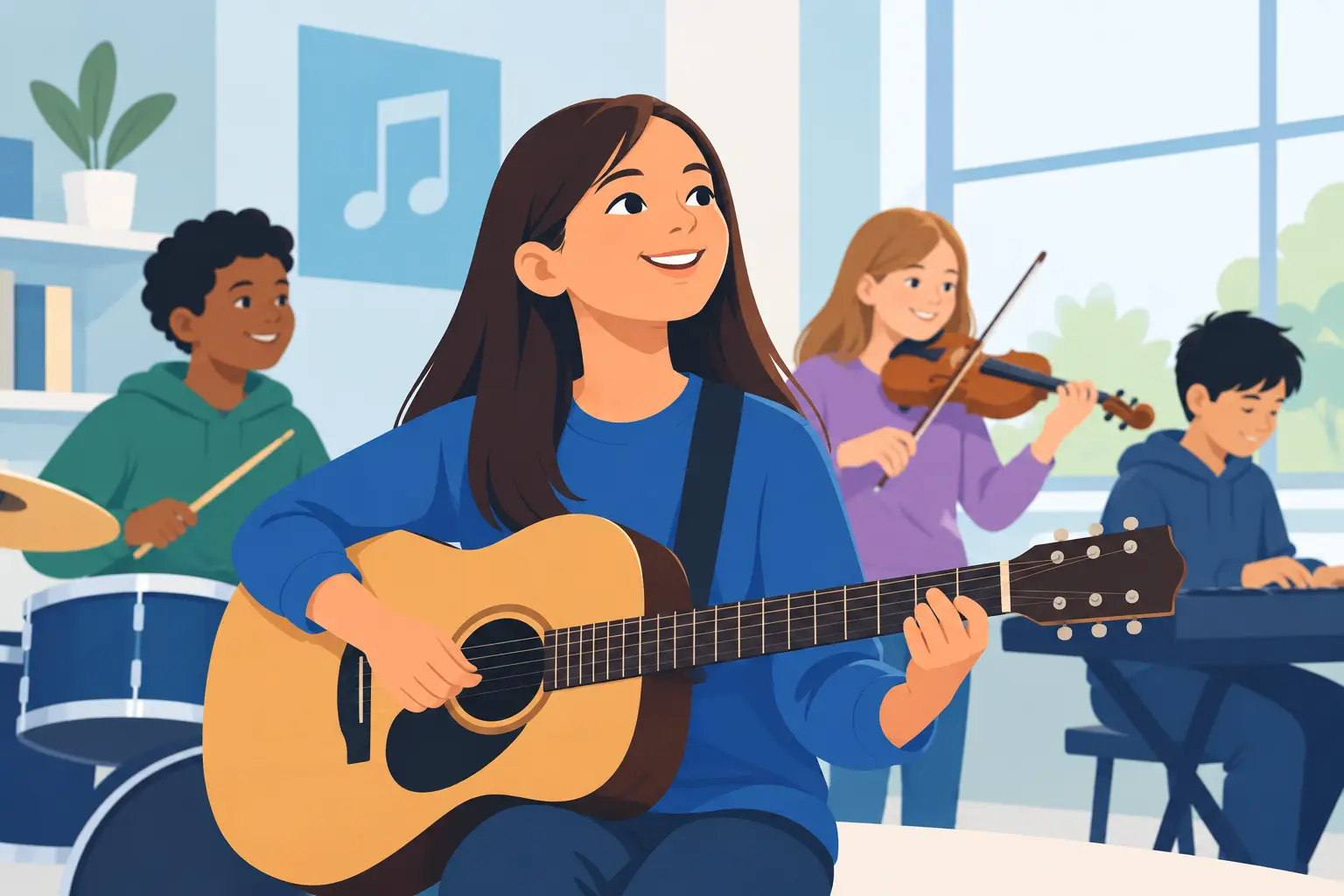
The best after school music programs do more than fill the hours between the final bell and dinner. They give students a place to make progress, try something brave, meet supportive peers, and feel proud of what they can do. For many families, that confidence carries into the classroom, at home, and eventually onto a stage.
Music can be a powerful part of a child’s week, especially when lessons feel personal instead of pressured. Whether your student is drawn to piano, guitar, drums, voice, bass, ukulele, or making beats, the right program turns curiosity into a skill they will want to keep building.
Why Music Is a Meaningful After-School Choice
After school can be a tough transition. Students have spent the day following schedules, solving problems, and managing social situations. Some need an energetic outlet. Others need a calm, creative space where they can reset. Music offers both.
A beginner drummer might burn off school-day energy while learning how to hold a steady beat. A young singer may discover that practicing a favorite song helps them express feelings they do not yet have words for. A piano student can experience the satisfaction of turning a tricky measure into something smooth and musical after a few patient attempts.
The benefit is not simply learning an instrument. Students practice focus, persistence, listening, and goal setting in a way that feels rewarding. They also learn that improvement is built one small win at a time. That lesson matters when a child is working through a hard math assignment, trying out for a team, or speaking up in class.
What Great After School Music Programs Include
Not every program offers the same experience. Some are designed around large groups and a fixed curriculum, while others give students more individual attention. Neither approach is automatically wrong, but families should look for a setting that fits their child’s personality, interests, and goals.
A student who is excited to play in a group may thrive in a band class or jam session. Another may need private instruction first, where an instructor can slow down, answer questions, and choose songs that make practice feel achievable. Semi-private lessons can be a wonderful middle ground for siblings, friends, or students who enjoy learning alongside someone else.
The strongest programs usually share a few qualities:
- Instructors who adjust the lesson to the student instead of forcing every student through the same path
- Clear, encouraging feedback that helps students understand what to practice next
- Music students actually enjoy, alongside the fundamentals that help them grow
- Performance opportunities that build confidence gradually
- A welcoming environment where beginners are never made to feel behind
The goal is not to create pressure. The goal is to give students structure, encouragement, and a reason to keep showing up.
Personalized Lessons Make Progress Feel Possible
Children learn at different speeds, and their motivation comes from different places. One student may be eager to read music and master classical piano pieces. Another may want to learn a favorite pop chorus on guitar as soon as possible. Both goals can lead to strong musicianship when an experienced teacher knows how to connect the student’s interests to the next skill.
Personalized instruction also helps students work through obstacles before frustration takes over. If a child struggles with rhythm, hand position, or stage nerves, a caring instructor can break the challenge into manageable steps. That kind of support is especially valuable after a long school day, when students need encouragement more than another setting where they feel evaluated.
Performance Turns Practice Into Pride
Practice at home matters, but students often discover a new level of motivation when they have a chance to share their music. A recital, open mic night, band performance, or casual jam session gives practice a purpose beyond checking off an assignment.
Performance does not have to mean sending a nervous beginner onto a huge stage without preparation. The best opportunities meet students where they are. A first performance might be one song in front of family and friends. Later, a student may be ready to play with a band, sing at an open mic, or perform at a respected local venue.
That progression is powerful. Students learn that nerves are normal and that courage is not the absence of nerves. It is preparing, taking a breath, and sharing what they have worked hard to create. When the song ends and the audience applauds, students often see themselves differently.
At Matt Burk Music Studio, performance development is part of the learning journey, with opportunities for students to grow from lessons and jam sessions to live experiences at venues such as House of Blues and Hard Rock Cafe. It gives families a visible milestone and gives students a real reason to celebrate their effort.
How to Choose a Program for Your Child
Start with your child, not the instrument you think they should play. Ask what music they listen to, what they notice in songs, and whether they would rather sing, strum, tap, or create sounds on a computer. They do not need a perfect answer. Interest is enough to begin.
Then consider the practical details that shape consistency. Is the studio convenient for your family’s routine? Are lesson times flexible when sports, school events, and busy seasons arrive? Does the program require a long contract, or can your family make sure the fit is right first? A great program on paper is only helpful if your student can attend consistently and enjoy the experience.
It is also wise to ask how the instructors communicate with families. Parents should know what their child is learning, what progress looks like, and how to support practice without becoming the practice police. A simple routine of short, focused practice sessions usually works better than a long session once a week. For younger students, even five to ten minutes of joyful consistency can build momentum.
Look for Encouragement, Not Empty Praise
Students need to feel supported, but they also need honest coaching. “Great job” is helpful when it is paired with something specific: “Your rhythm stayed steady through that whole chorus,” or “Your left hand is much more relaxed this week.” Specific encouragement teaches students what they are doing well and what they can improve next.
The right teacher celebrates effort while still providing direction. That balance helps students become confident without expecting every new song to be easy. Music is fun, but it also teaches resilience. A student who learns to work through a difficult chord change or challenging vocal phrase gains more than a musical skill.
Making Music Fit a Busy Family Schedule
Many parents worry about adding one more activity to an already full calendar. That concern is real. The best after-school activity is not always the one with the most impressive brochure. It is the one your child can attend regularly, look forward to, and continue long enough to experience genuine progress.
Music can fit well because it creates a healthy rhythm in the week. Lessons provide accountability, while home practice can be flexible. Some weeks will be busier than others, and that is okay. A supportive program helps families adapt rather than making them feel like one missed lesson ends all momentum.
If your child is curious but hesitant, a trial lesson can be a low-pressure first step. Let them sit at the piano, hold a guitar, step behind a drum kit, or sing into a microphone. Sometimes the moment a student makes their first recognizable sound, the question changes from “Should we try music?” to “When can I come back?”
A child does not need to be naturally fearless or instantly talented to belong in music. They need a place where they can start, a teacher who believes in them, and enough encouragement to keep going when a new skill feels difficult. Give them that chance, and they may find more than an after-school activity. They may find a voice, a community, and a gift they are excited to share with the world.