
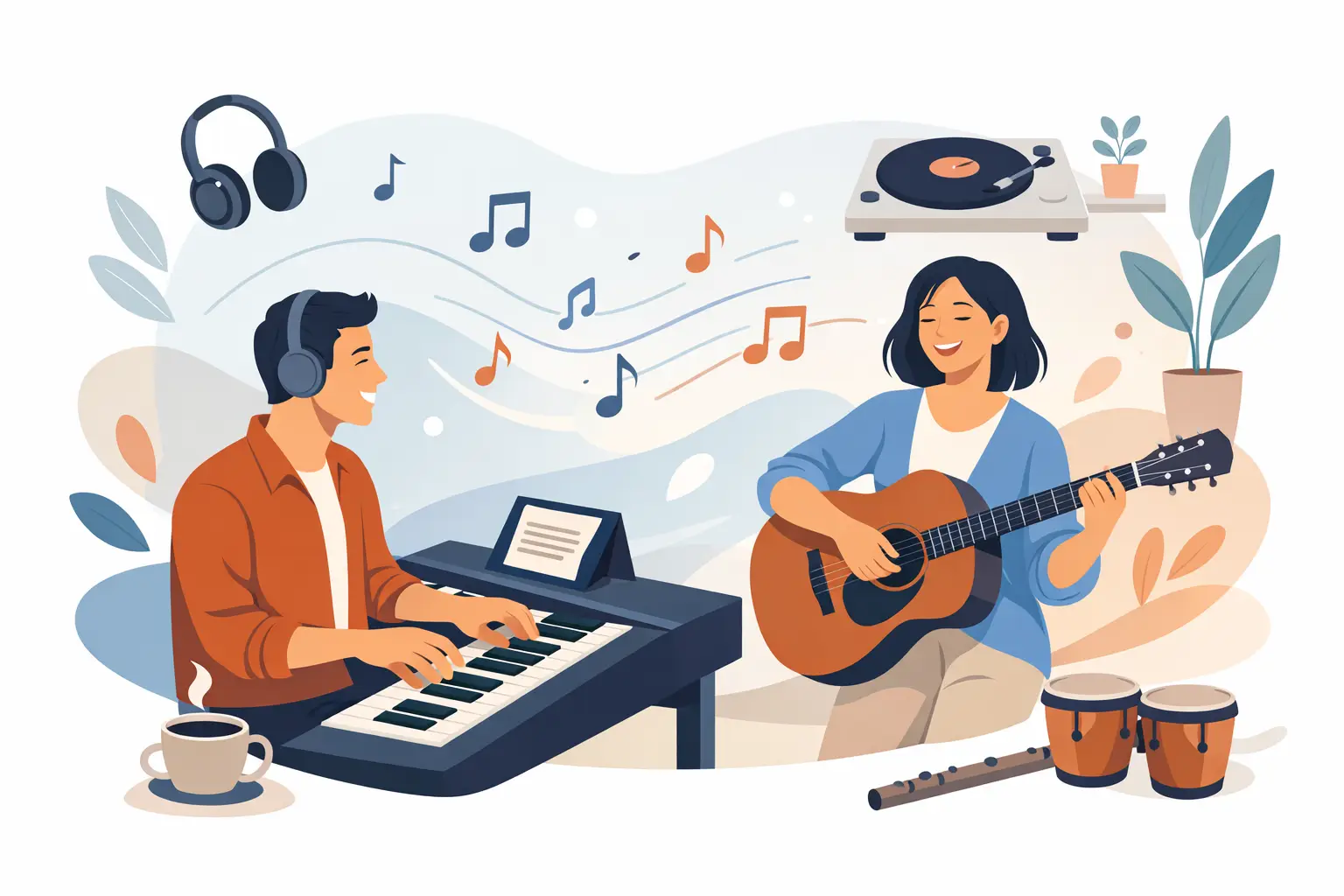
The old piano book is still in the closet. Your guitar has been in its case for years. Maybe you sang in choir, played drums in a school band, or took a few lessons as a child and stopped when life got busy. For an adult beginner who has returned to music, that first step back can feel exciting and strangely vulnerable at the same time.
You may wonder whether you are too rusty, too busy, or too old to make real progress. You are not. You do not need to prove anything on day one. You simply need a clear goal, a supportive teacher, and a lesson experience that makes you want to come back next week.
Why Adult Beginners Returning to Music Have an Advantage
Adults often underestimate what they bring to a music lesson. You may not have the free afternoons you had as a kid, but you have something just as valuable: perspective. You know what music means to you. You may want to play favorite songs, accompany yourself while singing, join a casual jam session, write music, or finally feel comfortable performing for friends and family.
That sense of purpose matters. A child may practice because a parent sets a routine. An adult can connect practice to a personal win: playing the opening of a song after a long workday, keeping a steady beat with a band, or singing with more confidence at an open mic night. Those moments make the work feel worthwhile.
Returning to music is also different from trying to recreate your childhood experience. You do not have to start with the same method book, the same instrument, or the same pressure. If piano never clicked when you were eight but acoustic guitar does now, that is useful information. If you once played trumpet but want to learn voice or music production, you are allowed to choose a new path.
The trade-off is that adult schedules are real. Work, family, travel, and unexpected obligations can interrupt the best plans. Progress may not look like an hour of practice every day. It can still be meaningful when your plan is realistic.
Start With a Goal You Can Hear
“Get better at music” is a wonderful intention, but it is hard to measure. A more helpful first goal gives your lessons direction. You might want to play three songs confidently at home, learn basic chords for worship music, develop a stronger singing voice, or prepare for your first casual performance.
A good instructor will meet you there. Some adults want to learn to read music from the ground up. Others want to play familiar songs quickly and add theory along the way. Neither approach is more serious than the other. The best starting point depends on what will keep you engaged.
Try choosing a goal for the next eight to twelve weeks rather than imagining every skill you will ever need. For example, a new guitar student might aim to change between common chords without stopping. A returning piano player may work toward playing a favorite song with both hands. A voice student may focus on breath support, pitch accuracy, and singing one piece with confidence.
Small, visible wins build momentum. They also give you a reason to celebrate progress instead of constantly noticing what you cannot do yet.
Let Your Musical Taste Lead
Adults are more likely to stay with lessons when the music feels like theirs. That does not mean every song must be easy or familiar. It means your instructor should understand the sound and experience you are working toward.
Bring up the artists, styles, and songs you love. A strong teacher can use those interests to teach rhythm, technique, ear training, harmony, and musical expression. You may begin with a simpler arrangement before working toward the original version. That is not settling. It is building the skills that make the bigger goal possible.
Build a Practice Routine That Fits Real Life
The best practice routine is not the most ambitious one. It is the one you can repeat. Fifteen focused minutes four days a week can do more for your confidence than one frustrated two-hour session on Sunday night.
Give your instrument a place in your home where it is easy to reach. Keep the guitar on a stand, leave the keyboard ready to play, or set up your practice materials before you need them. Friction is one of the biggest enemies of adult practice. If getting started takes ten minutes, it is much easier to postpone.
When you sit down, know what you are doing. A simple practice session can include a few minutes of warmups, focused work on one skill from your lesson, and time to play something you enjoy. Finishing with a favorite song reminds you why you started.
It also helps to define a minimum practice day. On a packed day, maybe you play one scale, one chord progression, or one verse of a song. Keeping the habit alive matters. You can have longer sessions when life allows, but you do not need perfection to keep moving forward.
Choose Support That Feels Encouraging and Specific
Learning music as an adult should feel challenging, not intimidating. You need more than someone who can play well. You need someone who can listen to your goals, explain concepts clearly, notice what is improving, and help you work through the parts that feel frustrating.
Personalized lessons are especially helpful when you are returning after a long break. Maybe you remember note names but not rhythms. Maybe your hands know more than your brain expects. Maybe you have developed tension, habits, or self-doubt that need patient attention. An experienced instructor can identify your true starting point without making you feel behind.
At Matt Burk Music Studio, adult students can choose a lesson path built around their instrument, musical interests, schedule, and confidence level. That could mean private piano lessons, voice coaching, guitar instruction, drum lessons, bass, ukulele, or music production. The point is not to fit you into one rigid program. The point is to help you reach goals you care about while having fun along the way.
Flexibility matters, too. Adults often hesitate to begin because they assume one missed lesson means they have failed. It does not. A healthy music program makes room for real life and helps you return to your routine without guilt.
Make Performance a Possibility, Not a Threat
You do not have to perform publicly to be a real musician. Playing for yourself is a valid and meaningful goal. Still, many returning adults discover that a low-pressure performance opportunity gives their practice new purpose.
A jam session, open mic, small group class, or supportive studio event can help you move beyond playing only in private. You learn how to start again after a mistake, keep time with other musicians, and share a song without waiting for it to be flawless. Those are skills, not personality traits.
Performance should happen when you are ready and in a setting that feels encouraging. For some people, that may be playing one song for a spouse or friend. For others, it may grow into joining a band or stepping onto a local venue stage. Both count as progress because both ask you to share more of your music.
Your First Lesson Can Be Simple
You do not need to practice for weeks before taking a lesson. You do not need to buy every accessory or remember everything you once knew. Bring your questions, your favorite songs, and an honest picture of what you want from music now.
A first lesson is a chance to get clear. You can talk through your goals, try the instrument, see how the teaching style feels, and leave with a practical next step. A free trial lesson can be an easy way to find out whether the experience feels like the right fit.
Music does not ask you to become the person you were at twelve. It gives you a chance to become more fully yourself now. Pick up the instrument, play one note, and let that be enough to begin.